
It begins before the sun rises.
Long before he stood on global stages or addressed the nation from the ramparts of the Red Fort, our Prime Minister Narendra Modi was known as a chaiwala.
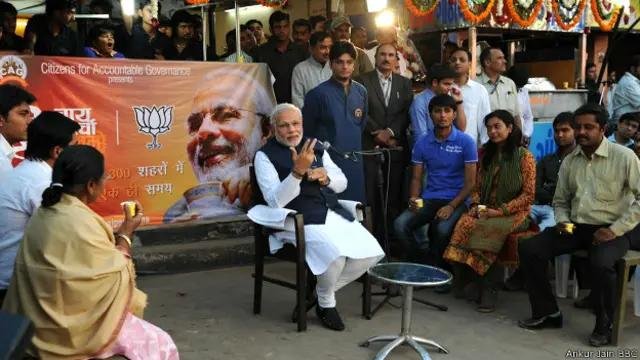
As a young boy in Vadnagar, Gujarat, he helped his father sell tea at a railway station — serving cups to travellers rushing between destinations. Years later, that modest beginning would return to the national imagination, not as a footnote, but as a powerful symbol. During an election campaign, the phrase “chaiwala” was transformed from a jibe into a badge of pride. And soon after, it evolved into “Chai Pe Charcha” — a nationwide political outreach where conversations over tea became a tool for dialogue and democracy.

In many ways, Modi’s journey mirrors India’s own relationship with chai.
Chai in India has never been about status or ceremony. It belongs equally to railway platforms and drawing rooms, to roadside tapris and Parliament lawns. It is humble, accessible, and deeply social — a drink that invites conversation rather than formality.
Chai in India is not just a beverage; it is a ritual, a pause, a shared language. From hurried cutting chai gulped between local train stops to long conversations at chai pe charcha, tea quietly stitches together the country’s everyday moments.
If there’s one drink that Indians instinctively reach for, it’s tea. Travel anywhere, from Kashmir all the way down to Kanyakumari and you’re never too far from a chai shop. And where milk isn’t easily available, chai simply finds another way. In parts of Bengal, people sip what’s called liquor cha—strong Assam tea brewed without milk. Add a bit of cardamom and a squeeze of lime, and it turns into lebu cha: light, fragrant, and perfect for lingering conversations.
The story of cutting chai begins in Mumbai, the city that never slows down. As mill workers, dockhands, and office-goers rushed through packed streets and suburban railway platforms, time and money were always in short supply. Tea vendors responded with a simple innovation, serving half a glass of chai instead of a full one. Cheaper, quicker to drink, and just enough to refresh, the “cutting” of chai soon became part of Mumbai’s rhythm. Over time, cutting chai turned into a cultural shorthand for urgency, affordability, and the city’s relentless pace — a small glass holding the energy of an entire metropolis.
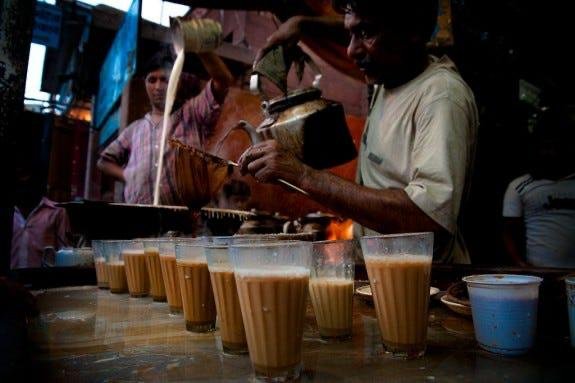
At the chai tapri, democracy brews strong. Auto drivers, students, labourers, executives, and retirees stand shoulder to shoulder, united by steaming glasses of tea. Conversations here are raw and unedited — cricket scores, exam anxiety, rising prices, heartbreaks, and political opinions simmer alongside the boiling brew. The tapri becomes a newsroom, a confessional, and a community space rolled into one.
Inside Indian homes, chai carries comfort and courtesy. It is offered before questions are asked and before stories are told. “Chai lenge?” is less a question and more a gesture of belonging. Recipes vary by household — extra ginger in winter, cardamom for guests, adrak tulsi when someone is unwell. Each cup holds memory, habit, and care passed down through generations.
For students, chai is survival fuel during exam nights. For office workers, the 4 pm tea break is sacred, a collective pause to breathe and reset. For travellers, chai tastes best on railway platforms, served in kulhads, accompanied by the familiar call of “chai, chai, garam chai.” In motion or in stillness, tea remains constant.
Chai has also entered India’s public imagination. From political slogans like “Chai Pe Charcha” to startup brainstorming sessions and late-night debates, tea has become the backdrop to ideas and opinions. It reflects India’s unique ability to elevate the ordinary into something meaningful.
In 1689, English priest John Ovington, in his travel account A Voyage to Surat, recorded that the banias of Surat drank tea without sugar, occasionally blending it with preserved lemons, and also used it as a medicinal remedy for headaches and stomach ailments.
Today, chai continues to evolve. Cafés experiment with artisanal blends and global flavours, while social media romanticises slow sips and aesthetic cups. Yet the soul of chai remains unchanged. Whether it is a half-glass of cutting chai gulped on a crowded platform or a leisurely cup shared in discussion, chai continues to blur boundaries of class, language, and generation.
In a country of countless differences, chai remains a rare constant. It asks for nothing more than a moment of pause.
From cutting chai born out of necessity to chai pe charcha shaping conversations, India does not merely drink tea — it lives by it.
Key Characteristics:
Portion: “Cut” means half a glass, making it affordable and allowing multiple servings.
Flavor: Brewed strong with tea leaves, milk, sugar, and spices like cardamom and ginger.
Serving: Traditionally in small, single-walled glasses at roadside tapris.
How it’s Made & Served:
Ingredients (tea, milk, sugar, spices) are boiled together for a longer time to infuse flavor.
It’s served extremely hot, creating a potent drink.