
-
Most of the action in the film Sholay, including the climax of the film is dictated by the flip of a coin: The difference between winning and losing, or success and failure
-
And that perhaps possibly underscores the reality that life from one day to the next has all the elements at best of an uncertain gamble; a calculated risk, balanced on a knife’s edge between life and death
-
A masterpiece in brilliant story-telling that has gone into the making of an unforgettable film
Ranked as one of Indian cinema’s greatest cult classics, director Ramesh Sippy’s ‘Sholay’ is celebrated its 75th year of release. On Aug 15, 1975, the film was released in theatres across India. But nobody could then tell how the future would unfold in the coming days, either for the film itself or for its multi-starrer cast.
The film’s initial response had been lukewarm. This made the director jittery, so much so that the director had approached the film’s story writing duo, Salim- Javed, hoping to incorporate script changes and reshoot some scenes.
But the writing duo were confident the film would work its magic given a little time and convinced the director to change his mind (not the script).
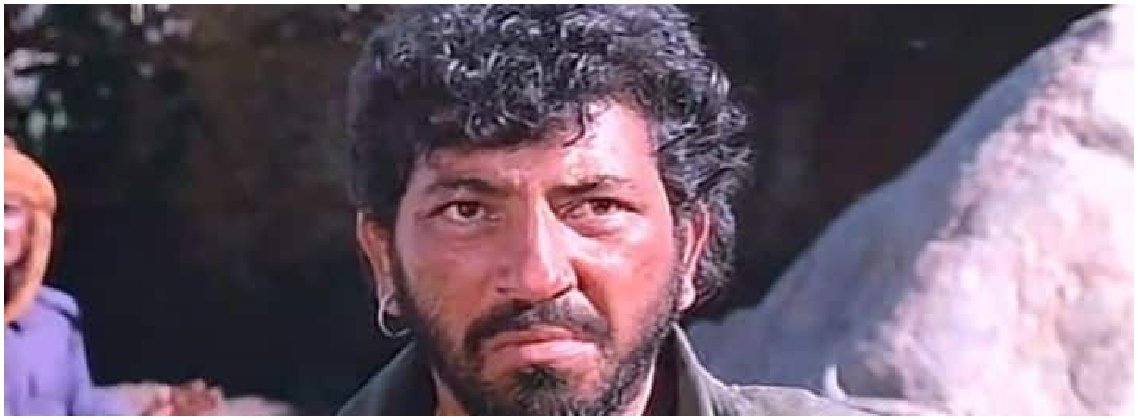
Today, Salim-Javed’s prediction about ‘Sholay’ stands true and tall, towering over the cinematic landscape like a colossus. But what turned out to be the most unpredictable factor in the film was Amjad Khan making his debut as Gabbar Singh, in a film full of legendary actors like Sanjeev Kumar, Dharmendra Jaya Bachchan, and big-draw names like Amitabh Bachchan, Hema Malini, and many others in the epic multi-starrer.
Director Ramesh Sippy had once remarked in an interview: “Amid the towering presence of all the other actors, debutante Amjad Khan, playing Gabbar Singh in his debut role, seemed to look like a mouse among men”
Nobody could have foreseen that with the passage of time, that mouse would transform into a terrifying, man-eating tiger, whose presence and roar still resonates around the world louder than ever, half a century later; one that fills the hearts of people young and old, with dread and awe in equal measure.
Elaborating on this paradoxical reality of evil, Javed Akhtar, of the famed Salim-Javed team says that in spite of everything, evil as a primal force, exerts a compelling and powerful hold over people and society.
He cites the example of children at the zoo. “Their first option is never about exotic birds, fish or other animals. They all want to first see the fearsome, man-eating tiger”.
Akhtar in another interview recalled the director’s mixed feelings on the choice of Amjad Khan, a complete unknown to step into the role of Gabbar Singh.
‘For Gabbar’s role our first choice wasn’t Amjad Khan. It was Danny Denzongpa. He was even signed up for the role. However, as the filming of “Sholay kept getting delayed, he quit as he had to go abroad for the shooting of Feroz Khan’s “Dharamatma”.
“It was then that Amjad’s name came up for consideration”, says Javed Akhtar. “I had seen some of his work as a stage actor and recommended his name to Director Ramesh Sippy. Eventually, it was my writing duo partner Salim Khan, who contacted Amjad for the role, as he was a friend of Amjad’s father Jayant, a well-known Bollywood actor from the fifties. Amjad was the second of his three sons; the eldest being Imtiaz Khan and the youngest being Inayat Khan.
Elaborating on this paradoxical reality of evil, Javed Akhtar, of the famed Salim-Javed team says that in spite of everything, evil as a primal force, exerts a compelling and powerful hold over people and society.
Rather than being intimidated or unnerved, Amjad just knuckled down and got on with the job. As a result, Gabbar Singh is now regarded as the evilest villain in Bollywood history. Across generations his lines echo and re-echo, among all age groups, like irresistible, magical mantras.
Who can forget the threat in Gabbar’s voice when he asks menacingly “kitne aadmi thay?” (How many were they?). Later, in the same scene, when another dacoit Kaalia, pleads for his life saying: “Sarkar. Humne aapka namak khaya hain” (Master, I have eaten your salt), Gabbar’s chilling reply cuts him short: “Ab goli kha” (Now taste a bullet).
Brilliant dialogue delivery by Amjad Khan and even more brilliant dialogues scripted by Salim Javed!!!! But how did it all happen; what triggered the spark for the fantastic storyline”
According to Javed Akhtar “we started off by writing a story about a blood-thirsty and ruthless dacoit, who kills without remorse, just for the fun of it. But as we went along, the plot became much bigger, with more and more characters becoming a crucial part of the narrative”.
As a direct consequence, Gabbar’s character began to assume a much larger significance, both for the story and actor Amjad Khan, and now as we all know, for the extraordinary impact the film has had as a historic milestone in Indian cinema”, Akhtar added.
Writer Salim Khan, the other half of the famed Salim-Javed team and father of Bollywood superstar, Salman Khan, says the character of Gabbar Singh was inspired by a real-life bandit and dacoit.
“As a youngster, I often heard my father, a senior police officer, telling stories of a dreaded dacoit named Gabbar Singh. It was from there that the seeds of imagination sprouted into the reel-life Gabbar Singh.
But how did Gabbar Singh’s persona achieve such gigantic proportions, such an ultimate personification of terror and
evil?
In response Akhtar says: “As a character, Gabbar is a complete antithesis devoid of the binding weight of any kind of restrictions or moral code of behaviour that society imposes on people. And in that sense, he feels completely free to act as he wishes and establish his own rules for life and living.
But that’s what made the portrayal of Gabbar Singh as a character so incredibly powerful, says Javed Akhtar. “The sheer intensity of the role had prompted requests from big stars like Sanjeev Kumar and Amitabh Bachchan to let them play the part of Gabbar Singh”, he added.
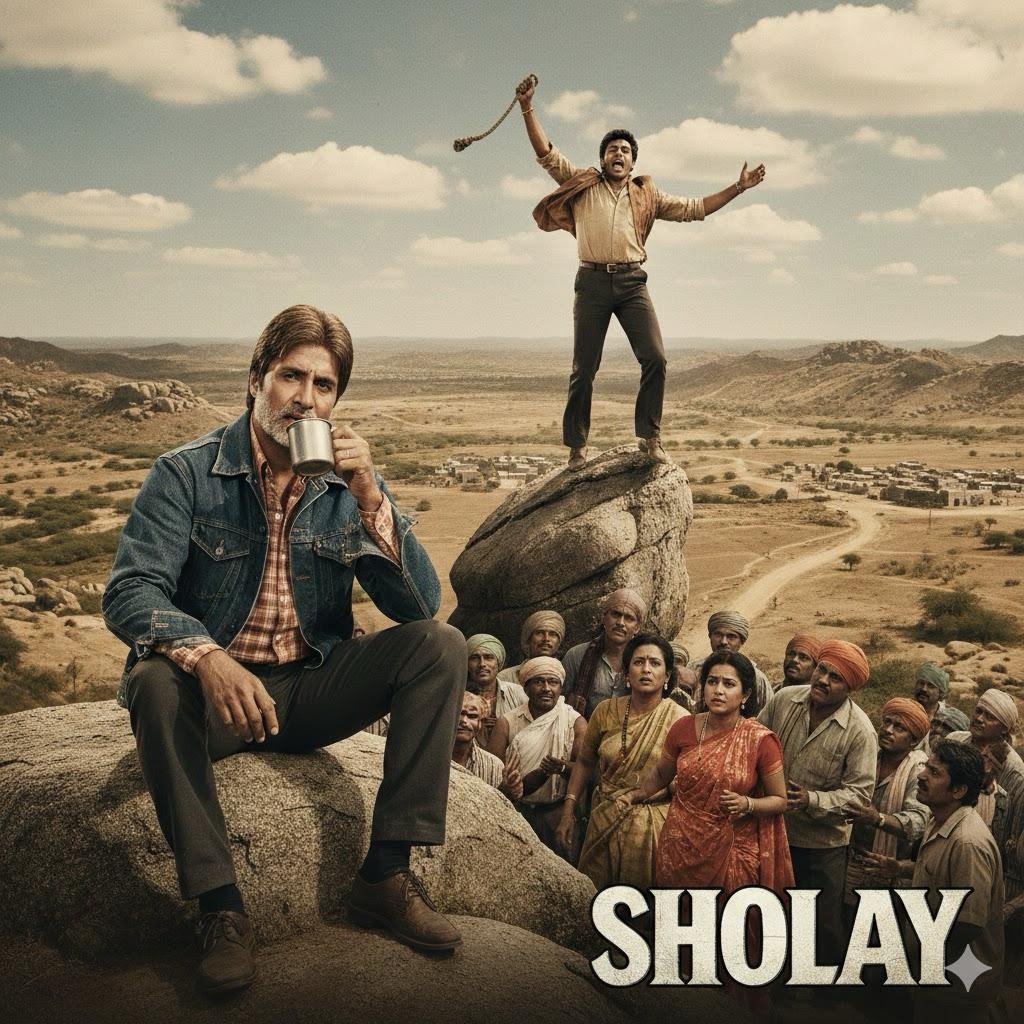
Sholay is one of Indian cinema’s most celebrated films, blending action, drama, romance, and comedy into an epic story. The film follows two small-time criminals, Jai (Amiitabh Bachchan) and Veeru (Dharmendra), who are hired by retired police officer, Thakur Baldev Singh (Sanjeev Kumar), to capture the ruthless bandit Gabbar Singh (Amjad Khan), terrorising the residents of Ramgarh, a sleepy village.
In-between there is the engaging chatter of Basanti (Hema Malini), a fiercely independent and charismatic tonga-driver in the village, the love interest of Dharmendra, and Jaya Bachchan’s enduring presence as the silent, grieving widow in Thakur Baldev Singh’s household. She comes within a hair’s breadth of finding love and redemption with Jai (Amitabh), but is cheated by the flip of a freak coin that has ‘heads’ on both sides.
That proved to be the fatal climax that claimed the life of Jai when he called ‘tails’ in a toss-up that saved the life of his buddy, Veeru.
The real tragedy lies in the fact that Jai kept the reality of the flawed coin a secret from his friend Veeru and in doing so sacrificed his life for his friend. It was only after his death that Veeru discovered the true ‘nature’ of the coin and realised how Jai had willingly given his life to save him. A truly classing ending in an enduring and classic film/
DISCLAIMER: The views and opinions expressed in this article are solely those of the author and do not necessarily reflect the official policy or position of Pravasi Samwad. Pravasi Samwad is not responsible for the accuracy, completeness, or reliability of any information presented.