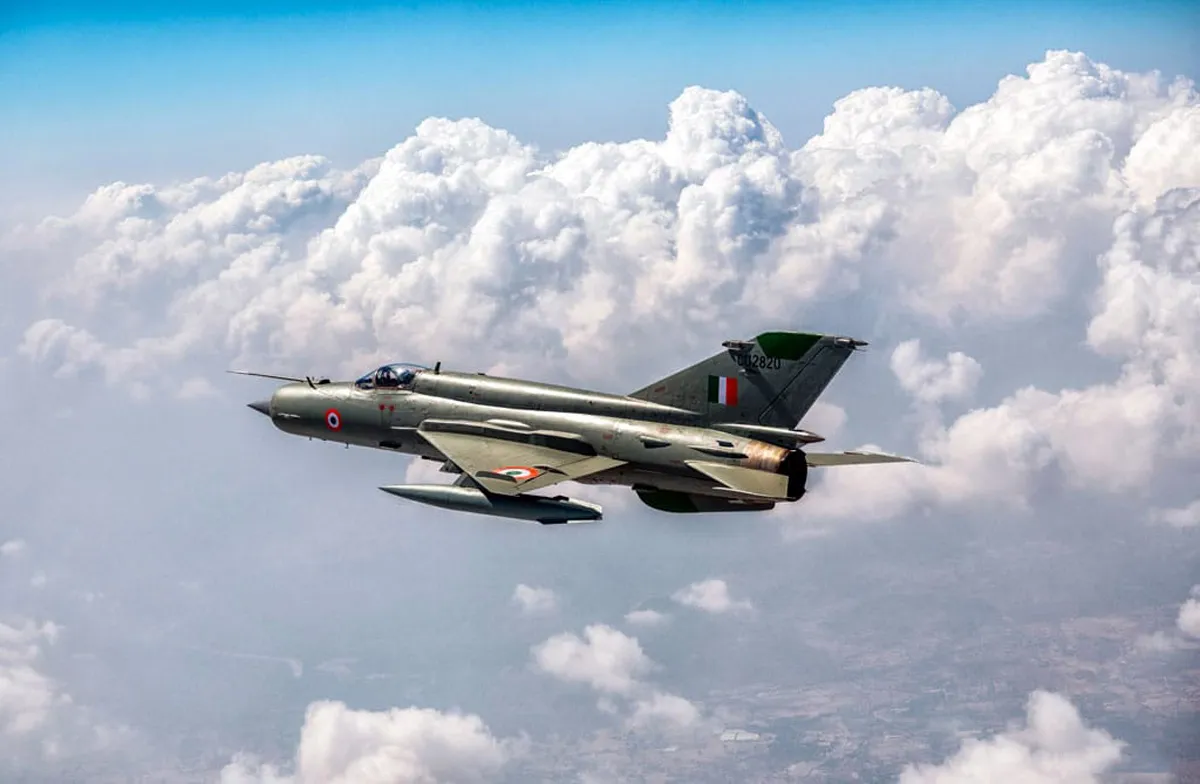

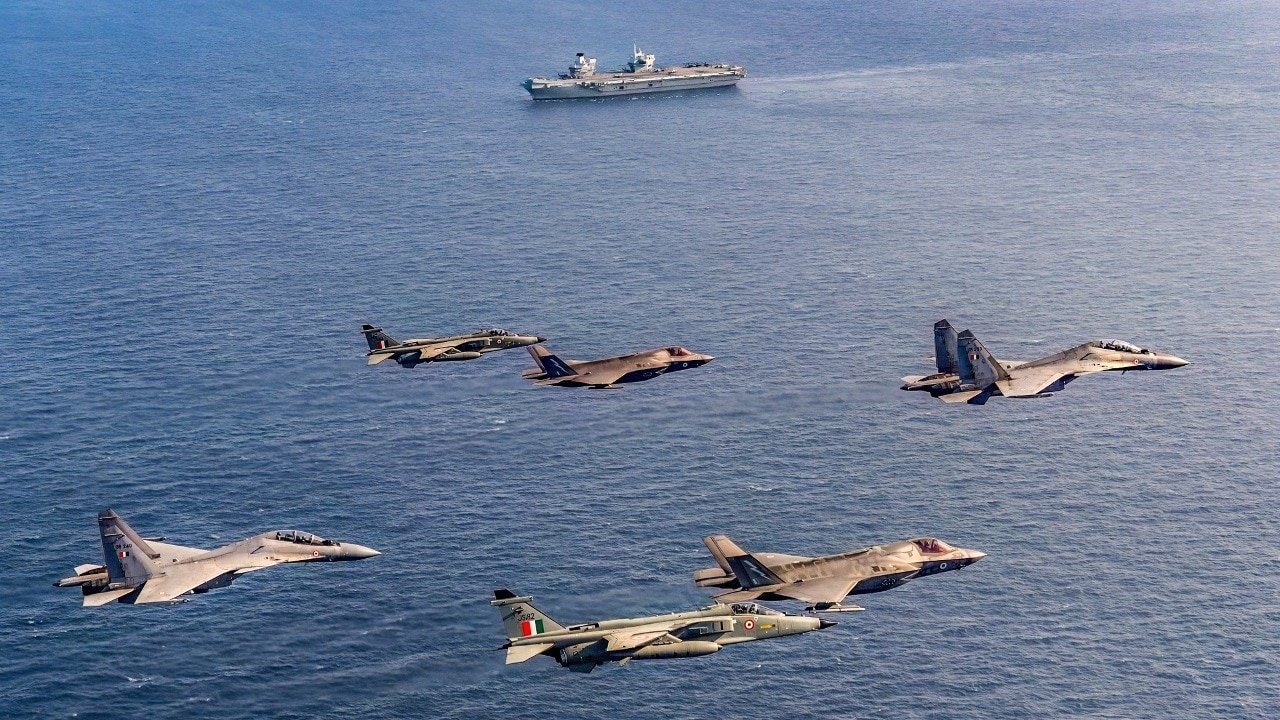
- The exercise is designed to showcase the combined might and perfect coordination of India’s Army, Navy, and Air Force
- In line with the country’s ‘Atmanirbharta’ or policy of self-reliance, India aims to prove that its armed forces can operate independently using homegrown technologies, indigenous weapons, and Indian strategies without relying on foreign equipment
As India prepares to launch one of its biggest military exercises in recent years – the Trishul tri-services exercise right near the border – a nervous Pakistan on the other side, is visibly worried and has gone into a state of high alert
The country has restricted several air routes across its central and southern regions. Islamabad has issued a Notam (Notice to Airmen) for October 28 29, and experts believe the move is directly linked to India’s massive show of strength.
India announced its Notam shortly before Pakistan’s move. There is speculation that Pakistan might be planning its own military exercise or even a missile test in response.
The Trishul exercise is scheduled to take place between October 30 and November 10 near Sir Creek, a highly sensitive border area that both countries claim as their own.
This is not a routine drill. According to satellite images studied by defence analyst Damien Symon, the airspace marked for the exercise at 28,000 feet (about 8.5 kilometres or 8,500 metres high, whereas commercial flights fly at 3,000 to 35,000 feet), making it one of India’s biggest joint military operations in recent years, as reported by India Today.
The sheer scale and location of the exercise suggests this could involve large-scale combat simulations and advanced weapon testing. Additionally, the ceiling height is a clear indication that the exercise involves major air operations with fighter jets, drones, and missiles, not just ground or sea drills.
Why Sir Creek Matters
But why is this exercise making Pakistan jittery? This is where Sir Creek comes into context. This is a 96-kilometer-long estuary in the marshy, swampy Rann of Kutch.
On one side there is India’s Gujarat state, and on the other is Pakistan’s Sindh province. Within this landscape, the Sir Creek opens into the Arabian Sea, creating a strategic waterway both countries seek to control.
However, both sides present conflicting opinions and arguments on where exactly the border should be drawn. India holds that the boundary should run along the mid-channel of the creek because the waterway is navigable during high tide.
International rules stipulate that when a waterway is navigable, the boundary must typically falls in the middle. Pakistan, however, claims the border lies along the creek’s eastern bank, giving them complete control over the water
An old 1914 Bombay Government Resolution contains conflicting descriptions, and both countries use different parts of it to support their claims.
If India were to choose the unlikely option of giving up Sir Creek, it would mean losing access to important sea routes, offshore resources, and a critical security zone.
In this regard, India insists upon a reappraisal of the boundary issue through fresh surveys and negotiations, not just old colonial-era maps, before reaching any conclusive decision in the matter. The marshy terrain of the creek, and its shifting channels brought on by tidal changes also require equal thought and consideration.
What Makes Trishul So Powerful
Defence Ministry sources have said that the exercise isn’t just about flexing military muscle. Trishul is designed to showcase the combined might and perfect coordination of India’s Army, Navy, and Air Force, it added
In line with the country’s growing policy of Atmanirbharta or self-reliance. India aims to prove that its armed forces can operate independently using homegrown technologies, indigenous weapons, and Indian strategies without relying on foreign equipment, the Defence Ministry sources stressed.
Troops from the Southern Command will participate in these war games, testing their ability to fight in some of the toughest terrains imaginable.
It will include offensive operations in the creek and desert regions, amphibious landings along the Saurashtra coast, and multi-domain operations combining land, sea, and air power all at once.
During such joint forces operations, the focus will be to improve teamwork and communication. Troops would also go through battlefield drills practicing attacks, defences, and rescue missions.
The Navy and Army would practice amphibious operations, simulating how they would land troops and vehicles from ships onto hostile beaches during a coastal battle.
The Air Force would provide air support, conduct strikes, and run surveillance missions to help ground troops. All the while, logistics teams would test how quickly they can move soldiers, fuel, ammunition, and equipment to the front lines.
Such exercises hone the Indian armed forces battle-ready skills, and fine-tune their coordination for a swift response..
Reason why Pakistan is feeling so jittery
The underlying reason for Pakistan’s to feel jittery about the Trishul exercise goes back Operation Sindoor.
In that operation, launched after the Pahalgam terror attack, Indian armed forces destroyed nine terrorist camps deep inside Pakistan and crippled 11 of Pakistan’s military bases and airfields.
Earlier, before the exercise was announced, Defence Minister Rajnath Singh had issued a stern warning while addressing troops at the Indian Air Force base in Bhuj.
The message was strong and clear: “If Pakistan dares to act in the Sir Creek sector, the reply will be so strong that it will change both history and geography.” That’s a strong signal that India is fully prepared and will respond with overwhelming force if challenged”.
DISCLAIMER: The views and opinions expressed in this article are solely those of the author and do not necessarily reflect the official policy or position of Pravasi Samwad. Pravasi Samwad is not responsible for the accuracy, completeness, or reliability of any information presented.