
- The government has clarified that renunciation of citizenship is a personal decision taken under the provisions of the Citizenship Act, 1955, and does not automatically reflect dissatisfaction with India
- Many former citizens continue to maintain strong economic, cultural, and familial ties with the country through Overseas Citizen of India (OCI) status
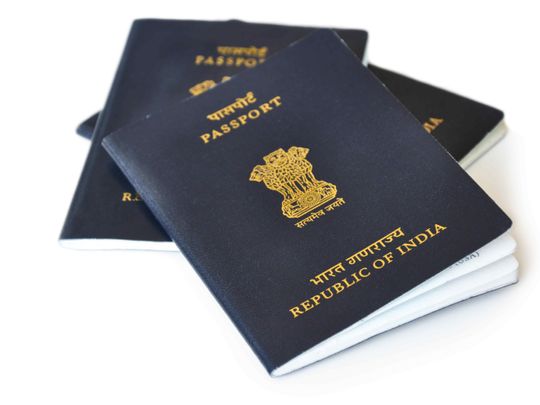
India has witnessed a sustained rise in the number of citizens renouncing their nationality, with nearly nine lakh people giving up Indian citizenship over the past five years, the Ministry of External Affairs (MEA) informed Parliament. The data was shared in a written reply in the Rajya Sabha by Minister of State for External Affairs Kirti Vardhan Singh, highlighting a long-term trend of outward migration and naturalisation abroad.
According to the government, records are maintained annually of individuals who formally surrender Indian citizenship after acquiring foreign nationality. Between 2011 and 2019 alone, more than 11.89 lakh Indians gave up their citizenship. When viewed over a longer period, the scale becomes even more significant: over the last 14 years, more than 20 lakh Indians have renounced their nationality.
The year-wise figures presented in Parliament show that the numbers have remained consistently high, with a notable increase in recent years. In 2011, around 1.22 lakh people renounced Indian citizenship, a figure that stayed above 1.2 lakh annually for most of the decade. The trend continued upward through 2016, when over 1.41 lakh people gave up citizenship, and peaked at 1.44 lakh in 2019.
- The COVID-19 pandemic briefly disrupted this pattern
- In 2020, the number dropped sharply to about 85,000, likely due to global travel restrictions and delays in immigration and naturalisation processes
- However, the decline proved temporary. In 2021, the figure rebounded strongly to over 1.63 lakh.
The sharpest surge came in 2022, when more than 2.25 lakh Indians renounced citizenship—the highest annual figure recorded so far. Although the numbers dipped slightly in subsequent years, they remained well above pre-pandemic levels, with about 2.16 lakh people in 2023 and over 2.06 lakh in 2024 giving up Indian nationality.
Experts attribute this steady rise to a mix of factors, including better employment opportunities abroad, higher education prospects, family reunification, and immigration-friendly policies in countries such as the United States, Canada, Australia, and parts of Europe. India does not allow dual citizenship, which means individuals acquiring foreign nationality must formally renounce their Indian citizenship.
The government has clarified that renunciation of citizenship is a personal decision taken under the provisions of the Citizenship Act, 1955, and does not automatically reflect dissatisfaction with India. Many former citizens continue to maintain strong economic, cultural, and familial ties with the country through Overseas Citizen of India (OCI) status.
Nevertheless, the data underscores the scale of global mobility among Indians and the growing importance of the Indian diaspora in the world economy.