

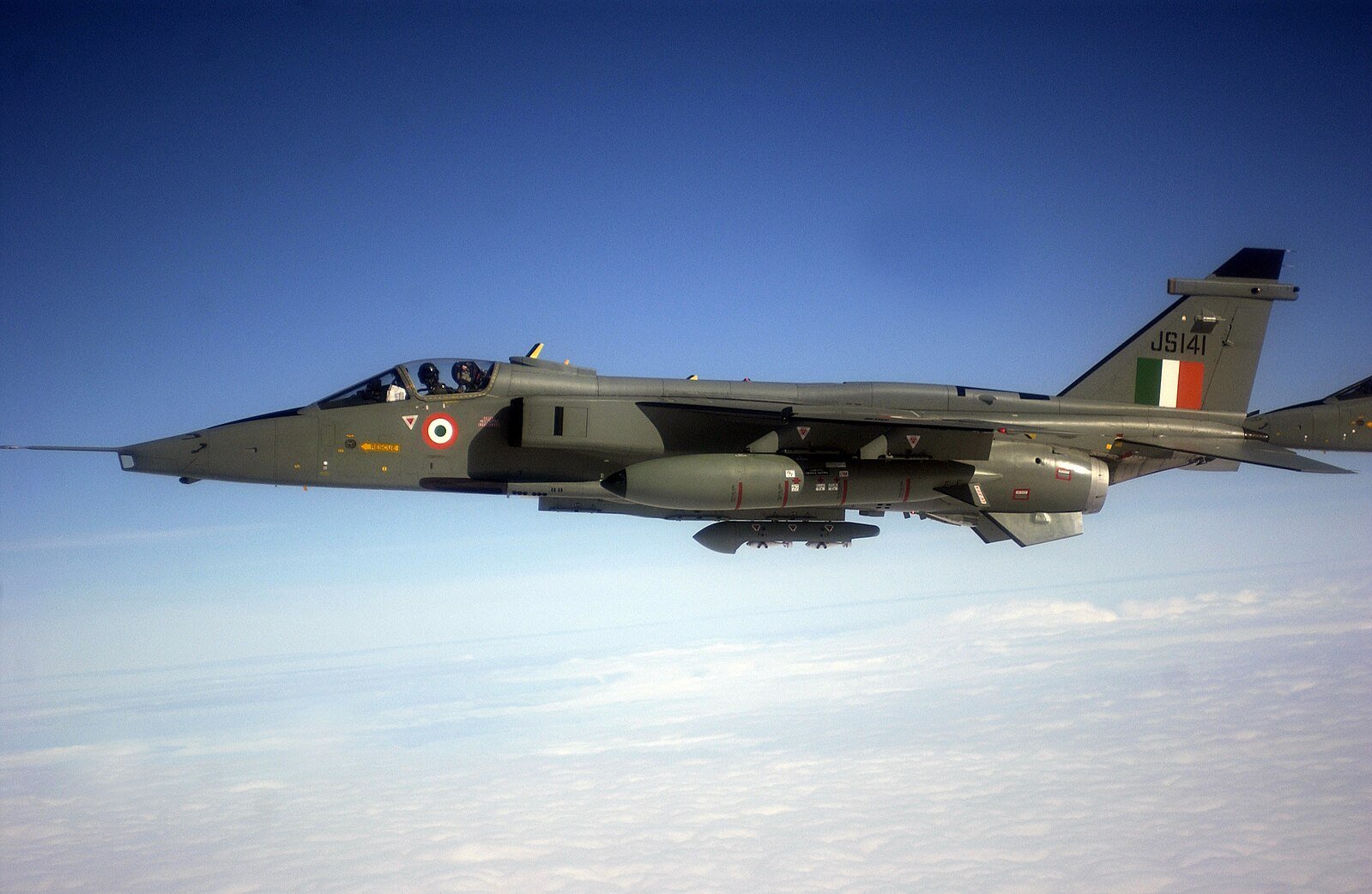
As the IAF carefully manages this final chapter of the Jaguar story, cannibalising retired Omani aircraft underscores both the strategic importance of the type and the challenges of sustaining an ageing but vital strike platform in a rapidly modernising air force
India is taking an unconventional route to keep its ageing SEPECAT Jaguar fleet airborne, turning to retired Omani aircraft for urgently needed spare parts. The Jaguars, known in Indian Air Force (IAF) service as Shamsher, have been a cornerstone of India’s precision-strike and low-altitude attack capabilities for over four decades. With production halted decades ago and other operators retiring the type, India now relies heavily on retired foreign fleets to maintain its operational readiness.
The Royal Air Force of Oman operated 27 Jaguars from the late 1970s until their retirement in 2014. Many of these airframes remain structurally sound, offering a valuable supply of components, from hydraulics and avionics housings to landing-gear assemblies and engine modules. India’s Ministry of Defence confirmed that discussions on transferring these spares are in advanced stages. Rather than transporting entire aircraft, India plans to harvest only the components needed to extend the life of its operational fleet—a practice colloquially known in aviation circles as “cannibalisation” or creating a “Christmas tree” of parts.
- Currently, the IAF operates six Jaguar squadrons with roughly 115–120 aircraft on paper, though fewer are flyable due to maintenance constraints
- Non-upgraded Jaguars are expected to begin phased retirement by 2027–28, while upgraded DARIN III jets may remain in service until 2031–32
- India’s transition plan includes the Tejas Mk1A and Mk2 light combat aircraft and, eventually, the Advanced Medium Combat Aircraft (AMCA)
The Jaguar’s most pressing challenge lies in its engines. The Rolls-Royce–Turbomeca Adour series, once reliable, now faces wear and reduced performance in India’s hot-and-high environments. Engine flameouts and compressor stalls have contributed to recent accidents, with three aircraft lost this year alone. A proposed re-engining program with Honeywell F125IN engines was abandoned due to cost and integration challenges, making cannibalisation the most practical method to maintain serviceability.
India’s search for spares is not limited to Oman. France previously transferred 31 retired Jaguars to India, and the UK is evaluating a similar transfer of nine aircraft along with hundreds of components. Oman offers a unique advantage: late-service parts that are more compatible with India’s upgraded DARIN II and DARIN III Jaguars, helping to stabilise operational readiness.