
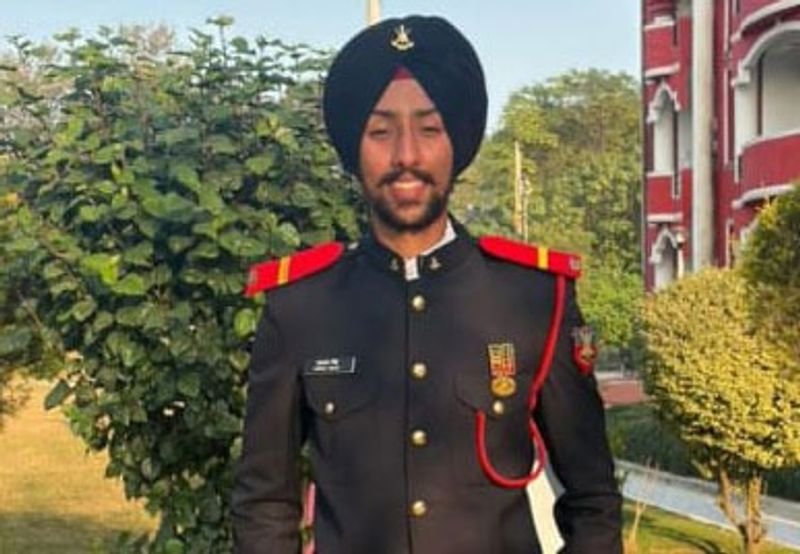
- While Lt Sartaj Singh inherits a remarkable legacy, his commissioning also marks the beginning of an individual journey
- As he steps into active service, his career will be defined by his own leadership, decisions, and dedication
At the Indian Military Academy’s recent Passing Out Parade, a quiet yet powerful milestone was marked as Lt Sartaj Singh was commissioned into the Indian Army. With this moment, he became the fifth generation from his family to don the olive green, extending a lineage of service that stretches back to the late nineteenth century. For the Singh family, military service has never been an abstract idea or a distant ideal—it has been a lived reality, passed down through example, experience, and unwavering commitment to the nation.
Raised in an environment shaped by tales of field postings, regimental camaraderie, and the demands of duty, Sartaj imbibed values such as discipline, resilience, and patriotism not from textbooks, but from everyday life. In his home, the uniform symbolised responsibility and sacrifice, and service to the country was treated as both an honour and a way of life.
- His story stands as a reminder of how tradition and personal resolve come together to sustain the enduring bond between families and the Indian Army
Sartaj has been commissioned into the 20 Jat Regiment, the same battalion in which his father, Brigadier Upinder Pal Singh, once served. This shared regimental connection adds a deeper resonance to his journey, reflecting the Indian Army’s strong regimental traditions and the rare continuity seen in multi-generation military families.
The family’s association with the Army began in 1897, when Sepoy Kirpal Singh of the 36 Sikh took part in the Afghan campaign. Since then, successive generations have served across defining chapters of military history.
Sartaj’s great-grandfather, Subedar Ajmer Singh of the 2 Field Regiment, fought in the Second World War, including the Battle of Bir Hakeim, and was awarded the Order of British India for his distinguished service. His grandfather, Brigadier Harwant Singh, played active roles in both the 1965 and 1971 Indo-Pak wars. Continuing the tradition, Sartaj’s uncle, Colonel Harvinder Pal Singh, served in challenging operational conditions during the Kargil conflict and in Siachen.
The legacy extends equally on his maternal side, with several relatives having served in World War I, World War II, the 1971 war, and subsequent operations, underscoring a family-wide commitment to the armed forces.
DISCLAIMER: The views and opinions expressed in this article are solely those of the author and do not necessarily reflect the official policy or position of Pravasi Samwad. Pravasi Samwad is not responsible for the accuracy, completeness, or reliability of any information presented.