
-
Released by NITI Aayog’s senior leadership, the report is the result of a collaborative effort with an IIT Madras-led consortium
-
Drawing on extensive surveys and stakeholder consultations across India and abroad, it is positioned as a landmark study from the Global South, offering critical insights for shaping India’s higher education internationalisation strategy
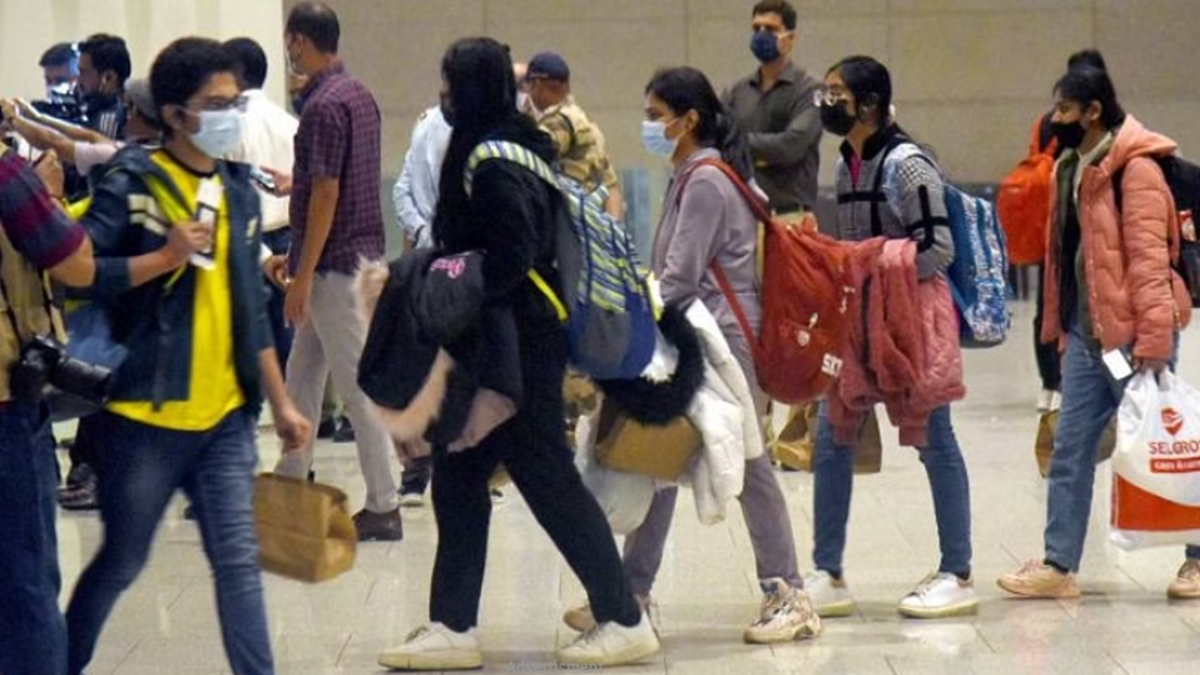
Indian students continue to look beyond national borders for higher education, with Canada, the United States and the United Kingdom maintaining their position as the most preferred international destinations. A recent report released by NITI Aayog highlights the scale, direction and impact of this growing outbound mobility, underlining both opportunities and challenges for India’s higher education ecosystem.
According to the report, Canada emerged as the leading destination in 2024, hosting around 4.27 lakh Indian students. The United States followed with nearly 3.38 lakh students, while the United Kingdom accommodated about 1.85 lakh. Australia and Germany also featured prominently, with more than 1.22 lakh and nearly 43,000 Indian students respectively. Together, Canada, the US, the UK and Australia hosted approximately 8.5 lakh Indian students during 2023–24, with Indian families spending an estimated ₹2.9 lakh crore on overseas higher education.
- The findings reinforce India’s position as the world’s largest source of international students. In 2024 alone, over 13.35 lakh Indian students were studying abroad
- This trend is partly driven by India’s demographic profile, as the country has the largest higher-education-age population globally, with nearly 15.5 crore individuals in the 18–23 age group
However, the report also draws attention to a widening imbalance. For every one international student coming to India, about 28 Indian students chose to study overseas in 2024, pointing to a significant outflow of talent. While India continues to attract foreign students, inflows remain modest. Data for the academic year 2021–22 show that Nepal, Afghanistan, the United States, Bangladesh and the UAE were the top countries sending students to Indian institutions.
Interestingly, smaller European nations recorded high proportions of Indian students within their international cohorts. Latvia reported the highest share at 17.4 per cent, followed by Ireland at 15.3 per cent and Germany at 10.1 per cent, indicating a diversification of destinations beyond traditional choices.
At the state level, Andhra Pradesh led the list of student-sending regions, followed closely by Punjab and Maharashtra. The financial implications are also notable. Outward remittances under the Reserve Bank of India’s Liberalised Remittance Scheme for education rose sharply from about ₹975 crore in 2014 to nearly ₹29,000 crore in 2024.