

The sustained strength of remittances demonstrates the enduring relationship between India and its global communities while highlighting the increasingly important role diaspora networks play in shaping economic outcomes across borders
India’s overseas community continues to reinforce its position as one of the most economically influential diasporas in the world through record remittance flows that support millions of households and contribute significantly to national economic stability.
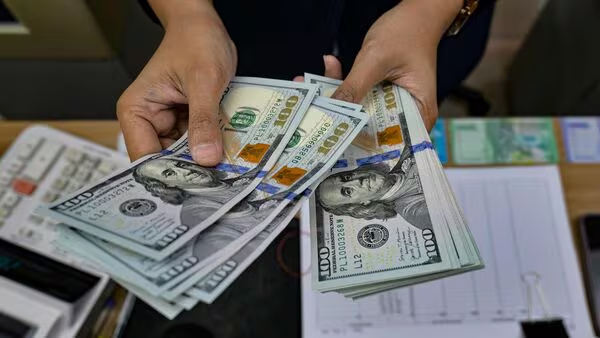
Recent migration and financial assessments reaffirmed that India remains the world’s largest recipient of remittances, receiving approximately $137 billion annually from citizens and people of Indian origin living abroad. The figures highlight the extraordinary scale of the country’s global migration network.
Economists describe remittances as one of India’s most dependable sources of external finance. Unlike investment flows that can fluctuate dramatically in response to market conditions, remittances tend to remain relatively stable because they are linked to family obligations and long-term community ties.
-
The structure of diaspora earnings is also changing
-
While Gulf countries remain a major source of remittances, highly skilled professionals in the United States, Canada, Britain, Australia, and Europe now account for a growing share of transfers
Funds sent home are used for education, healthcare, housing, entrepreneurship, retirement planning, and everyday household expenses. In several Indian states, remittances remain a critical pillar supporting local economies.
Business leaders emphasized that the diaspora’s contribution extends beyond money transfers. Overseas Indians increasingly serve as investors, startup founders, technology partners, and international business connectors.
Migration specialists observed that the global Indian community is becoming more geographically diversified, reducing dependence on any single labour market. This diversification strengthens the resilience of remittance flows and broadens economic opportunities.
Government officials and financial institutions continue paying close attention to diaspora engagement because of its strategic importance to foreign-exchange reserves and economic development.
Researchers believe the influence of overseas Indians will continue expanding as migration patterns evolve and demand for skilled labour grows worldwide.