
The FEMA requirement applies to Indian residents, while Gulf-based NRIs can generally retain locally earned salaries and savings abroad
India’s 180-day rule governing certain overseas funds has drawn attention among Indians living in the Gulf, but the requirement does not generally apply to non-resident Indians (NRIs) who earn and hold their income overseas.
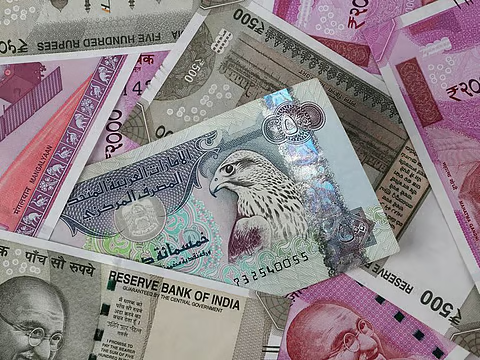
The rule stems from India’s foreign exchange regulations and applies primarily to a “person resident in India” under the Foreign Exchange Management Act (FEMA). Resident individuals using the Liberalised Remittance Scheme (LRS) can remit up to US$250,000 in a financial year for permitted overseas transactions. Certain foreign currency or investment proceeds may have to be reinvested, spent for an eligible purpose or brought back to India within 180 days.
For Gulf-based NRIs, the key factor is their FEMA residential status rather than their Indian citizenship. An Indian citizen who qualifies as a person resident outside India does not turn their Gulf salary into an LRS remittance simply because they hold an Indian passport.
As a result, NRIs working in countries such as the UAE and Saudi Arabia can generally keep their locally earned salaries and savings in bank accounts in their country of residence, subject to local banking and financial regulations
The clarification is particularly relevant because concerns have emerged over offshore accounts and the use of foreign-issued credit cards by Indian residents. Such issues should not automatically be interpreted as restrictions affecting all Gulf-based NRIs.
The distinction between residents and non-residents remains important when assessing overseas investments, foreign bank accounts and remittances. NRIs with complex financial arrangements or changing residency status may need to review their position under FEMA and applicable tax rules.
The latest clarification therefore offers reassurance to Gulf Indians that the 180-day requirement is not a blanket rule forcing NRIs to bring their overseas earnings back to India.