
There is also a soft power opportunity. Students educated in India to global standards become ambassadors for Indian institutions worldwide
PRAVASISAMWAD.COM
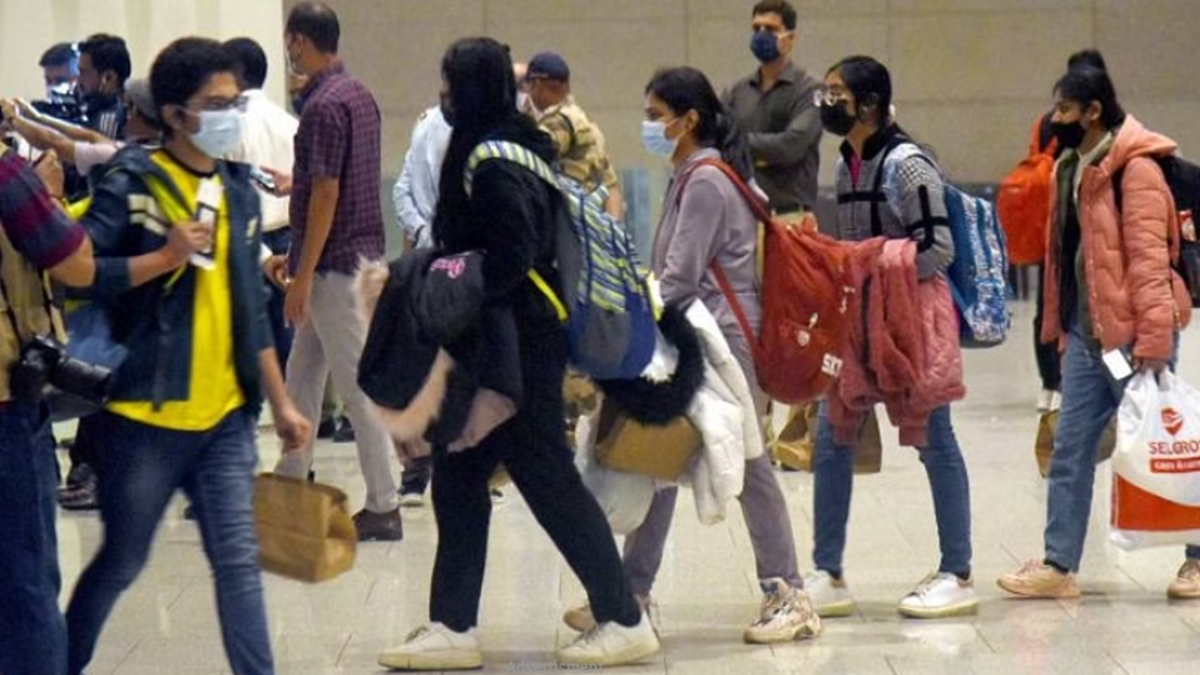
Recent data showing a nearly 75 per cent drop in Indian student enrolments in the United States should not be dismissed as a temporary disruption or a passing trend.
It is a clear structural signal, reflecting deeper changes in geopolitics, migration policies, rising education costs, and India’s evolving higher education ambitions. Treating this shift as a short-term anomaly would be a serious misreading of the moment, an indianexpress.com report by Ramgopal Rao, Vice-Chancellor, BITS Pilani campuses; former Director, IIT Delhi, said.
For decades, the US was the default destination for India’s brightest students. However, increasing visa uncertainty, restrictive immigration policies, steep tuition fees, and growing social discomfort for immigrants have altered the risk–reward equation. Indian students are responding pragmatically by reconsidering their choices, Rao said in the article.
According to Ramgopal Rao, this development need not be viewed negatively for India. In fact, it presents a rare opportunity to retain a significant portion of high-quality talent within the country. If managed well, this shift could help accelerate India’s transition from a largely service-driven economy to one rooted in deep technology, research, and innovation. Achieving this, however, will require deliberate policy action, institutional reform, and sustained capacity building.
The most immediate challenge is capacity. India’s top institutions remain severely constrained in terms of seats, faculty strength, laboratories, and research infrastructure. As more students choose to stay back, pressure on these institutions will grow. Without rapid and strategic expansion, we risk replacing one talent bottleneck with another.
Quality and global relevance are equally critical. Students traditionally went abroad not only for degrees, but for exposure to cutting-edge research, interdisciplinary learning, and strong industry links. Indian institutions must now offer comparable academic depth. This means expanding joint degree programmes, enabling international credit transfers, promoting faculty mobility, strengthening collaborative doctoral supervision, and aligning curricula with global benchmarks rather than inward-looking frameworks.
There is also a significant economic dimension to this shift. Indian families spend billions of dollars every year on overseas education. Redirecting even a portion of this spending towards domestic institutions could dramatically strengthen India’s higher education ecosystem. To do this, funding models must evolve. Blended approaches combining public funding, flexible fee structures, philanthropic support, alumni giving, and industry partnerships are essential. University endowments, in particular, must become a core pillar of institutional resilience, supported by more favourable tax policies for education philanthropy.
Industry will play a decisive role in shaping this new equilibrium. As global capability centres expand rapidly across India, there is a strong opportunity to align higher education with advanced industrial needs. Industry-linked PhD programmes, translational research funding, and shared research infrastructure can be powerful catalysts. Retaining undergraduate talent is only part of the equation; building a strong, employable, and globally connected doctoral workforce will determine India’s long-term competitiveness.
There is also a soft power opportunity. Students educated in India to global standards become ambassadors for Indian institutions worldwide. This enhances academic reputation, attracts international students, and gradually corrects long-standing imbalances in global education flows. To realise this vision, governance autonomy, academic freedom, and merit-based decision-making are non-negotiable.
According to Rao, the decline in Indian student enrolment in the US is not a crisis to be managed, but a transition to be shaped. If India treats this as a moment for structural realignment—by expanding capacity, improving quality, strengthening research, and building credible global pathways at home—it could mark the beginning of a new and more confident phase in India’s higher education journey.