
-
As climate change continues to make Arctic waters more navigable, the India–Russia Arctic partnership positions both countries to play a larger role in shaping future trade, energy flows, and security dynamics in the high north
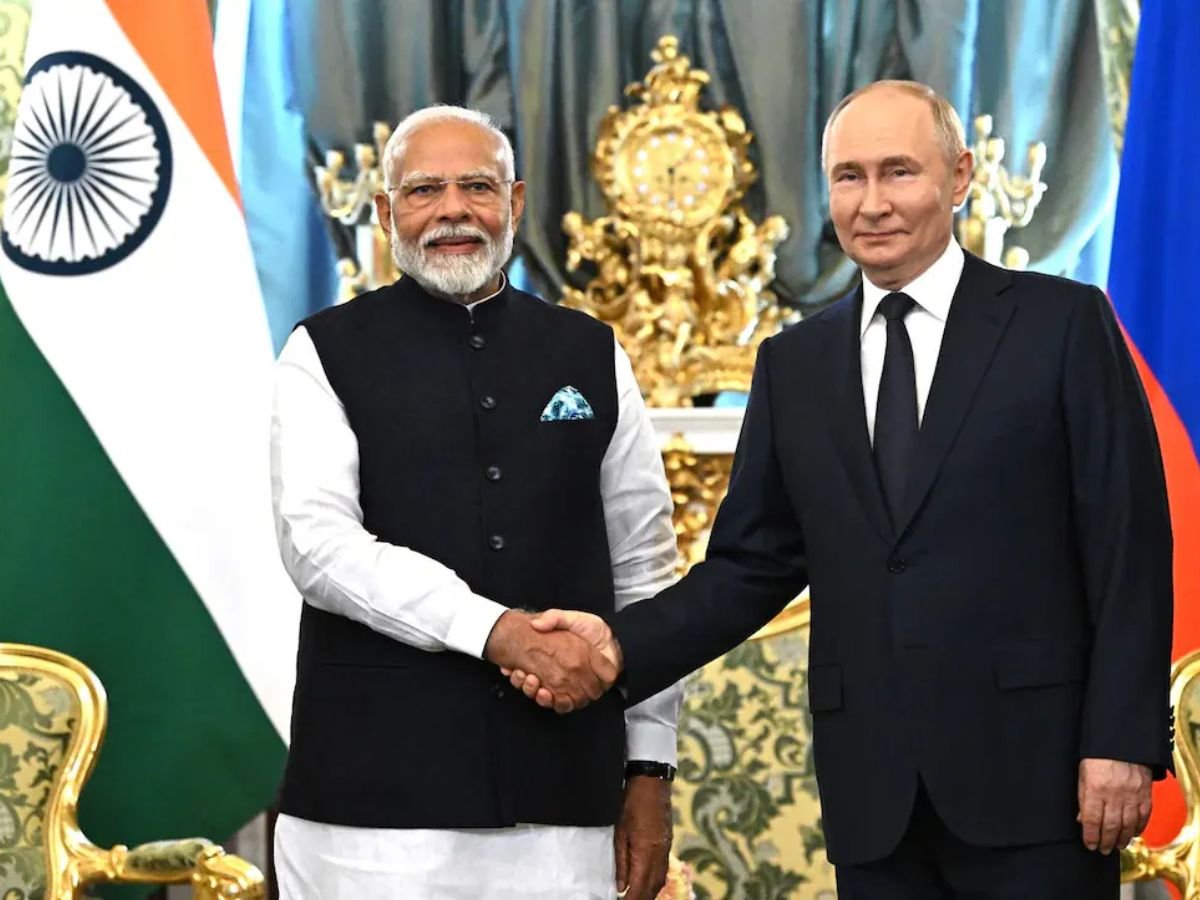
India and Russia have taken a significant step in deepening their strategic partnership by formalising cooperation in the Arctic, following Russian President Vladimir Putin’s state visit to New Delhi in December 2025. The agreement marks a new phase in bilateral ties, encompassing military access, maritime logistics, and the joint development of critical transport corridors linking Europe and Asia.
Under a five-year “Reciprocal Exchange of Logistics Support” arrangement, India has been granted access to Russian naval ports along the Arctic coastline, particularly along the Northern Sea Route (NSR). The pact also includes provisions for training Indian personnel in polar navigation and operations, as well as logistical support for military assets. At any given time, each country can deploy up to five warships, ten aircraft, and 3,000 personnel on the other’s territory, underscoring the scale of the cooperation.
-
The Arctic partnership is closely tied to broader ambitions to enhance connectivity
-
In a wide-ranging joint statement issued after the XXIII Russian-Indian Annual Summit, both sides committed to accelerating work on three major transport corridors: the NSR, the International North–South Transport Corridor (INSTC), and the Chennai–Vladivostok Eastern Maritime Corridor
Together, these routes are expected to significantly shorten shipping distances between Europe, Russia, and the Indo-Pacific, potentially reducing transit times by up to 40 percent compared to traditional routes such as the Suez Canal.
For India, access to the NSR offers an opportunity to diversify trade routes amid growing disruptions in southern maritime lanes caused by geopolitical tensions in the Red Sea and Black Sea regions. While the Arctic route is currently more commercially attractive for China due to its geographic proximity, New Delhi sees long-term strategic and economic value in developing alternative pathways and securing access to Russian Arctic energy resources.
Russia, for its part, views India as a key partner in balancing its growing dependence on China in the Arctic. Western sanctions imposed after Moscow’s invasion of Ukraine have pushed Russia to prioritise Asian partnerships for Arctic development. By expanding cooperation with India, Moscow aims to diversify investors, strengthen defence ties, and reinforce the NSR as a global trade corridor.
The partnership may also extend into joint shipbuilding, with discussions already underway on constructing ice-class merchant vessels suitable for Arctic conditions. Regular bilateral consultations on Arctic issues have been institutionalised, signalling sustained engagement.