
-
Europe’s approach marks a departure from earlier external pressure
-
Calls from Washington urging the EU to impose tariffs on India over its purchase of Russian oil failed to gain traction
-
Instead, Europe has chosen engagement over confrontation, signaling a pragmatic, long-term vision for trade with one of the world’s fastest-growing major economies
PRAVASISAMWAD.COM
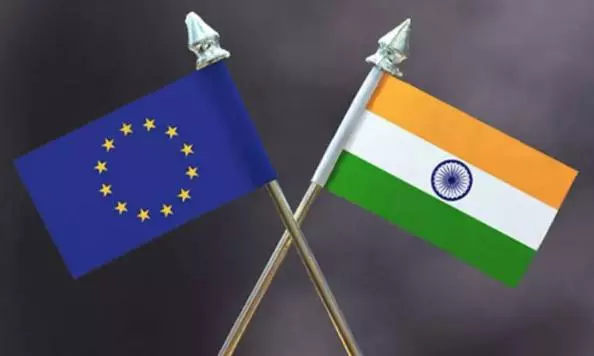
The long-negotiated India–European Union Free Trade Agreement (FTA) appears closer than ever to completion, reflecting a significant shift in global trade alignments amid rising geopolitical and economic pressures. As international commerce faces renewed uncertainty and protectionist trends, particularly from the United States, Europe is moving decisively to strengthen its economic partnership with India.
Recent signals from both New Delhi and Brussels suggest that the broad framework of the agreement is largely settled, with only complex final issues left to be resolved. A key milestone in this process will be the visit of India’s Union Minister for Commerce and Industry, Piyush Goyal, to Brussels on January 8 and 9. Brussels, which also houses the European Union’s headquarters, is expected to host intensive discussions aimed at concluding negotiations during what officials describe as the final and most demanding phase.
Adding to the diplomatic momentum, leaders from the 27-member European Union are expected to visit New Delhi as special guests for India’s Republic Day celebrations on January 26. Such a coordinated political signal underscores the strategic importance both sides attach to the agreement and raises expectations of a formal announcement in the near future.
* The renewed push for the India–EU FTA comes against the backdrop of global trade turbulence, including aggressive tariff measures announced by US President Donald Trump
These included a steep 50 percent import tariff on Indian goods, incorporating a 25 percent countervailing duty
While such measures created international ripples, Indian officials have indicated that the impact on exports was manageable. More importantly, the developments appear to have reinforced India’s resolve to diversify its trade partnerships and reduce overdependence on any single market.
India has already advanced this strategy by signing trade agreements with Oman and New Zealand, while negotiations are progressing with countries such as Canada, Israel, and Chile. Within this broader outreach, the European Union occupies a central position due to its economic scale, regulatory influence, and role in global supply chains.
Political backing for the deal is increasingly visible across Europe. Finland’s Ambassador to India, Kimmo Lahdevirta, has described the FTA as a potential landmark achievement. Finland has also announced plans to invest around four billion euros in India, while Indian investments in Finland are expected to reach approximately ₹10,000 crore, highlighting a deepening two-way economic relationship.