
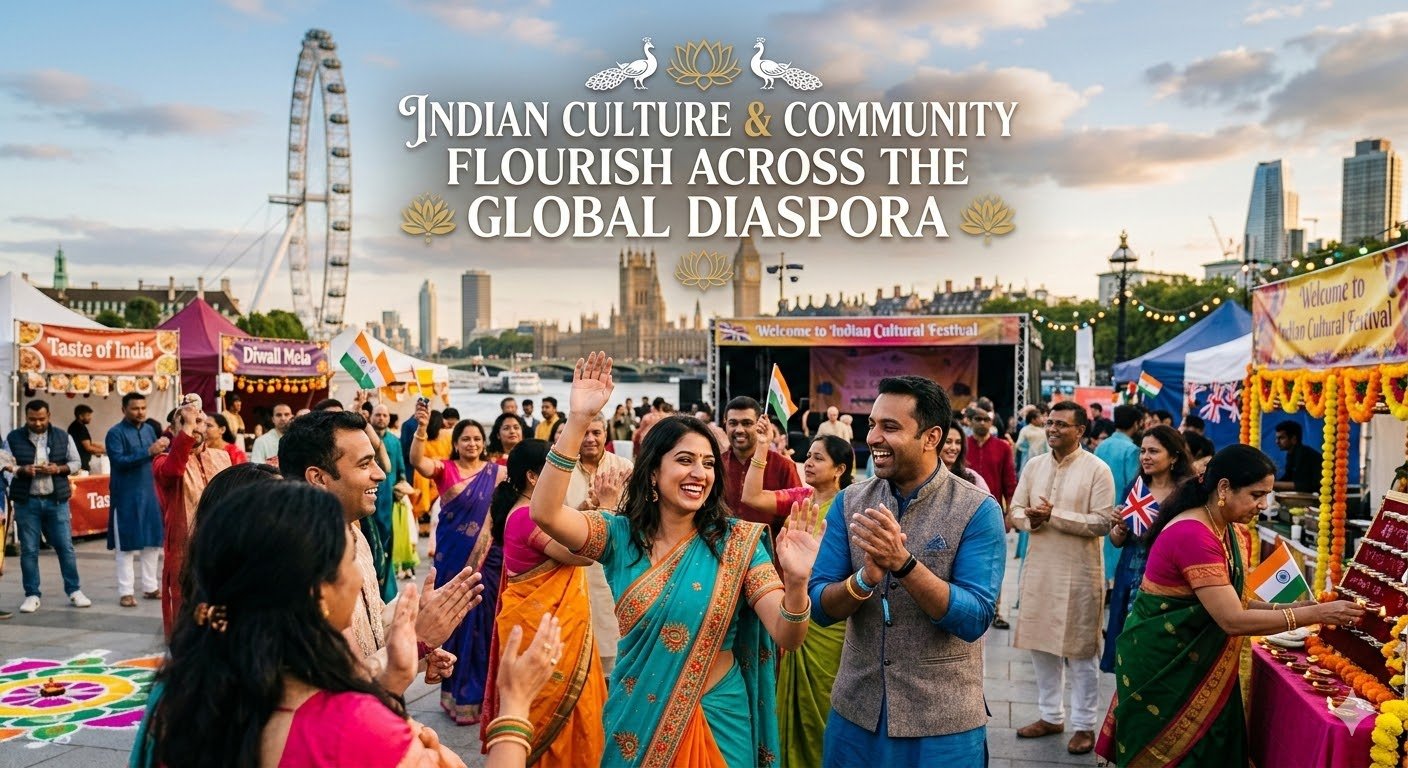
Their cultural institutions, businesses and social networks demonstrate that the Indian diaspora is now a lasting and important part of the global landscape
PRAVASISAMWAD.COM
Indian culture is becoming increasingly visible across the world as diaspora communities build lasting social and cultural institutions.
In Gulf countries such as the United Arab Emirates and Saudi Arabia, Indian communities have established temples, gurudwaras, schools and healthcare centres that serve thousands of residents.
These institutions reflect a shift in migration patterns. Many Indians who once travelled to the Gulf for short-term work are now settling for longer periods and raising families abroad.
In Europe and North America, Indian-owned restaurants, grocery stores and educational ventures have also become part of the urban landscape. These businesses introduce Indian culture to international audiences while providing familiar spaces for diaspora communities
However, migrants sometimes face challenges alongside opportunities. Recent incidents involving attacks on Indian-owned establishments in cities such as London have sparked concern among community leaders.
Such events have led to discussions about integration, safety and the importance of intercultural understanding.
At the same time, many stories highlight the compassion and solidarity found within diaspora communities. Acts of kindness by migrants often circulate widely online, showing how individuals support one another far from home.
These stories present a complex picture of life abroad. For many Indians, migration offers professional opportunities and a chance to experience new cultures.
Yet it also requires adapting to unfamiliar environments and sometimes confronting discrimination.
Despite these challenges, Indian communities continue to grow and influence the cities where they live.