
AI disruption and Trump’s new $100,000 H-1B visa fee are shaking career prospects for Indian professionals in the U.S
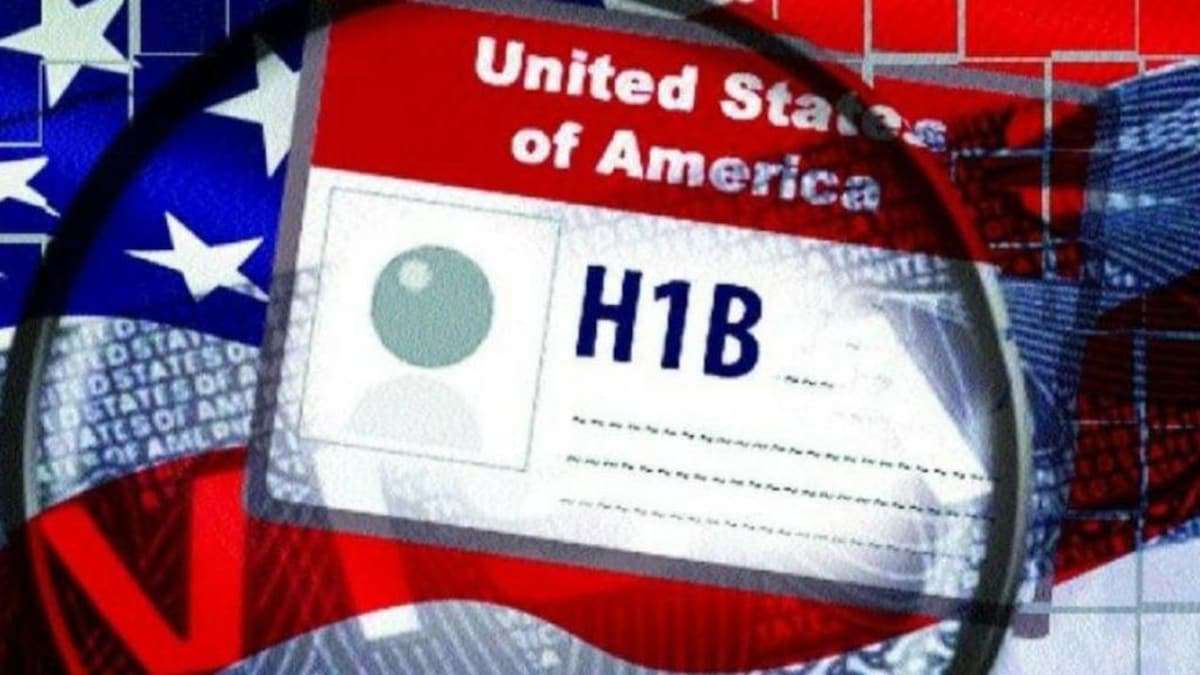
President Donald Trump’s September 19, 2025 proclamation imposing a $100,000 fee on new H-1B visa petitions has triggered deep anxiety among the Indian diaspora, which accounts for more than 70% of approvals. The move comes at a time when AI-driven disruption and economic uncertainty are already reshaping the professional landscape for Indian-origin engineers and tech workers in the U.S, reported outlookindia.com.
For more than two decades, the Indian diaspora in the U.S. has been hailed as a success story, powering industries from Silicon Valley startups to Wall Street firms. But that narrative is faltering. The rapid pace of AI is eliminating roles for many engineers, while layoffs in both startups and big tech firms highlight the fragility of employment. Even companies once considered resilient, such as Salesforce, have announced workforce cuts citing restructuring amid technological change.
The $100,000 visa fee and AI’s rise threaten the long-standing Indian student-to-professional pipeline, casting doubt on U.S. education’s returns and unsettling remittance-dependent families back home
The Trump administration’s latest proclamation marks a dramatic escalation in Washington’s immigration stance. Though existing H-1B holders and renewals are exempt, the fee will apply to new applicants starting February 2026. U.S. Commerce Secretary Howard Lutnick defended the measure, stating that the era of “inexpensive” foreign consultants bringing families into the U.S. is “just wrong.” The remarks reflect deepening resentment toward Indian professionals who have long dominated the programme.
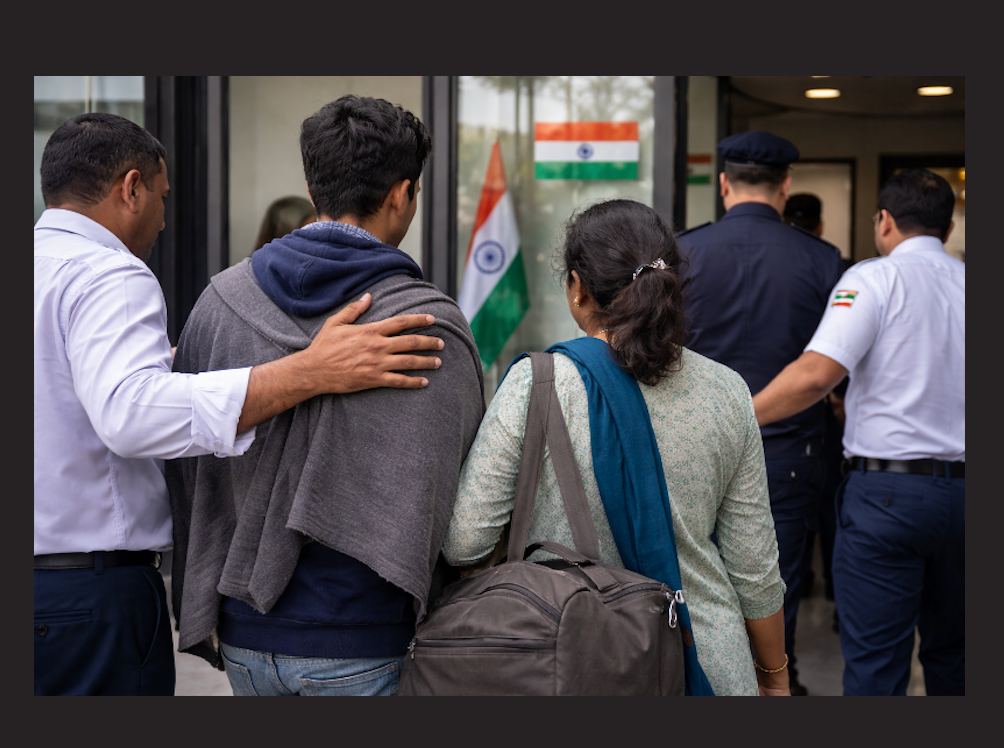
Over 50,000 Indians annually enter the U.S. on H-1B visas, most of them engineers. Entire Indian state economies, particularly in the south, depend on their remittances. Indian IT firms also rely on H-1Bs to staff U.S. projects, but the new costs may force more work offshore, creating ripple effects across both economies.
The uncomfortable truth is that the H-1B system has long leaned on cost arbitrage. Many Indian workers were hired not for elite expertise but because they accepted lower wages compared to American peers. With AI increasingly replacing routine coding and engineering roles, even this cost advantage is waning.
Traditionally, the H-1B visa symbolised a pathway: students arriving on F-1 visas, working under Optional Practical Training, and eventually transitioning to H-1B status with the hope of permanent residency. That pipeline is now under threat. Mid-sized U.S. firms are unlikely to shoulder the steep new costs, while students investing heavily in American education may rethink its value. The goalposts have shifted, and the U.S. may no longer be the assured stepping stone it once was for young Indian engineers.