
-
More than a decade later, the Maldives’ outreach to India suggests a pragmatic recalibration, driven by infrastructure needs and strategic considerations
-
For India, the decision on Hanimaadhoo will likely balance commercial caution with broader geopolitical and regional connectivity objectives
The Maldives has formally sought India’s assistance to operate and manage the newly upgraded Hanimaadhoo International Airport, signalling a renewed phase of cooperation in the civil aviation sector despite lingering memories of past setbacks involving Indian companies. The Government of India has asked the Airports Authority of India (AAI) to examine the proposal and assess its feasibility, according to officials familiar with the development.
The request was conveyed to India’s Civil Aviation Minister, K. Ram Mohan Naidu, during the inauguration of the upgraded airport on November 9, 2025. The minister attended the event as a special envoy of Prime Minister Narendra Modi, underlining the diplomatic importance attached to the project. Following the visit, the Ministry of Civil Aviation directed AAI to evaluate options for engaging Indian entities in the airport’s operations and management.
AAI is India’s primary airport operator, owning 113 airports and managing another 26 on behalf of state governments
In recent years, India has also adopted a public-private partnership model, with major private players such as GMR, GVK and the Adani Group operating 13 AAI-owned airports under long-term concession agreements. This diverse operational experience positions India as a strong candidate to support the Maldives in running modern aviation infrastructure.
India has already played a critical role in the redevelopment of Hanimaadhoo Airport. The project was supported by an $800 million line of credit extended through the Export-Import Bank of India, reflecting New Delhi’s broader infrastructure diplomacy in the Indian Ocean region. The $136.6 million redevelopment contract was awarded to Indian construction firm JMC Projects.
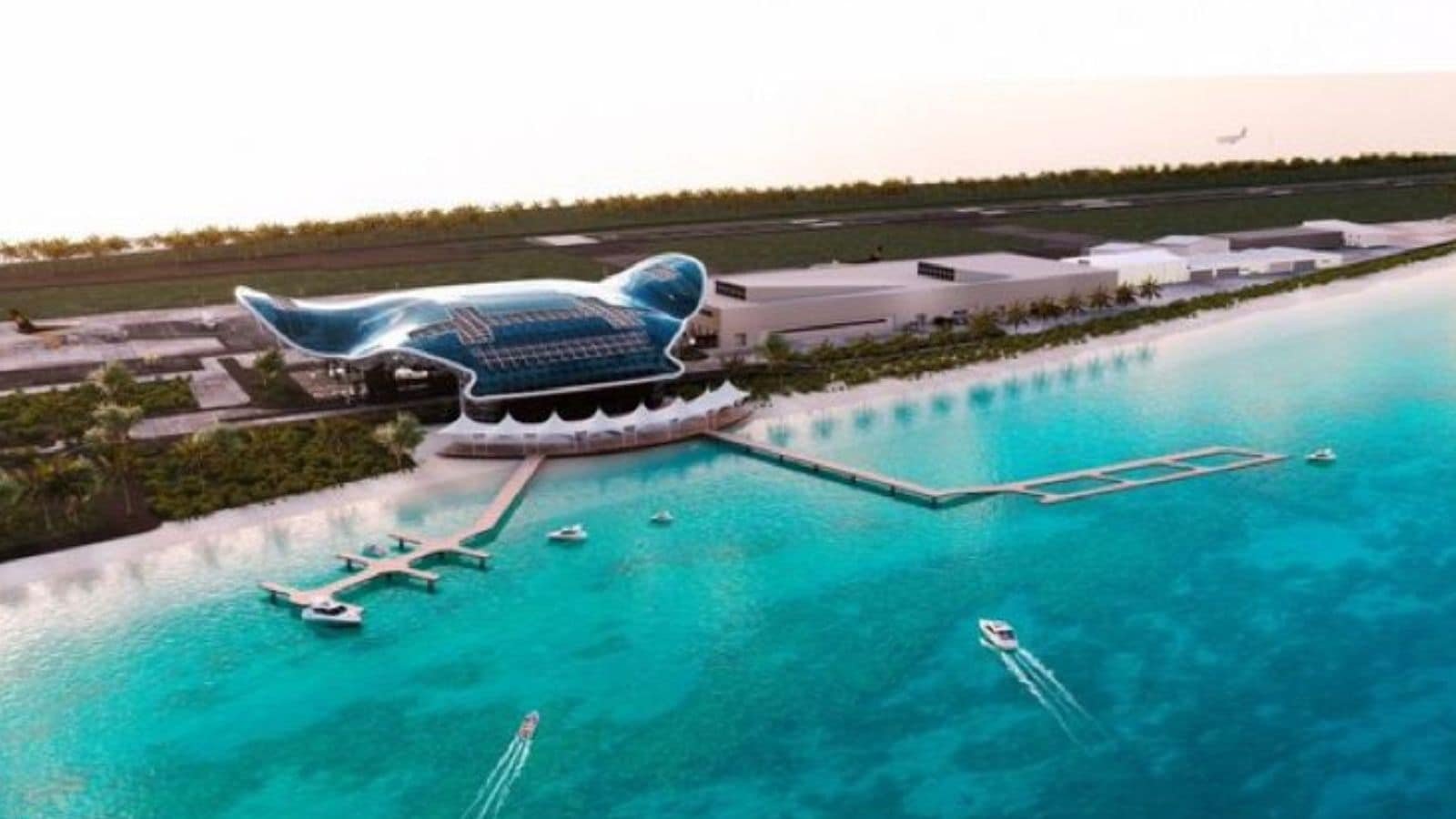
The upgraded airport features a 2,465-metre runway capable of handling Airbus A320 aircraft, along with a new terminal designed to accommodate up to 1.3 million passengers annually. Maldivian authorities expect the facility to boost connectivity and accelerate economic growth in the country’s northern atolls, which have traditionally lagged behind the capital region.
However, the proposal also revives memories of the controversial GMR episode of 2012, when the Maldivian government abruptly terminated GMR’s concession to operate and modernise Malé International Airport. The cancellation led to a prolonged legal battle, culminating in a Singapore-based arbitration ruling in 2016 that awarded GMR $270 million in compensation.