

Ongoing research is exploring whether insights from this unique organism could one day contribute to advances in medicine, renewable energy, or synthetic biology
An animal surviving entirely on sunlight may sound like science fiction, but marine scientists have confirmed that such a creature exists in nature. Discovered along the eastern coastline of the United States, a remarkable sea slug named Elysia chlorotica has challenged long-held assumptions about how animals obtain energy and survive.
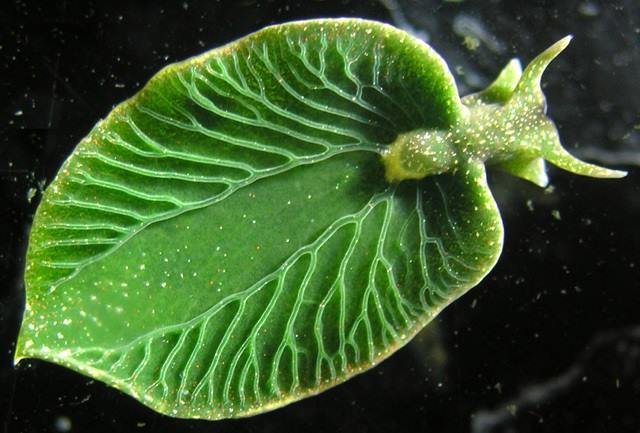
Bright green in colour and strikingly leaf-like in appearance, Elysia chlorotica drifts slowly through shallow coastal waters, often resembling floating vegetation. At first glance, it looks more like a plant than an animal. Yet, despite its appearance, the sea slug behaves like any other animal: it crawls, reacts to its environment, and responds to external stimuli.
What truly sets this sea slug apart is its ability to photosynthesize—something previously thought to be exclusive to plants and certain microorganisms.
During its early life stages, Elysia chlorotica feeds on algae. However, instead of digesting the algae completely, the slug selectively retains chloroplasts, the cellular structures plants use to convert sunlight into energy
These stolen chloroplasts continue to function inside the slug’s own cells, enabling it to draw energy directly from sunlight. This extraordinary process, known as kleptoplasty, allows the sea slug to survive for months—and in some observed cases, nearly a year—without eating any food. Scientists note that no other known animal sustains photosynthesis with such efficiency.
The slug’s preferred habitat plays a crucial role in this unique survival strategy. It is commonly found in tidal pools and salt marshes where shallow, sunlit waters provide the ideal conditions for both algae growth and sustained chloroplast activity. These environments help prolong the functionality of the chloroplasts once they are incorporated into the slug’s tissues.
Researchers believe that genes borrowed from the algae help maintain these chloroplasts and prevent them from breaking down quickly inside the animal’s cells. This genetic cooperation between plant and animal systems is what makes Elysia chlorotica a scientific marvel.
Scientists view this sea slug as powerful evidence that the boundary between plant and animal kingdoms is more flexible than once believed. Its existence raises fundamental questions about evolution, adaptation, and the limits of biological innovation.
- DISCLAIMER: The views and opinions expressed in this article are solely those of the author and do not necessarily reflect the official policy or position of Pravasi Samwad. Pravasi Samwad is not responsible for the accuracy, completeness, or reliability of any information presented.