
Doha’s new museum will feature paintings, films, tapestries, and installations by India’s celebrated—and sometimes controversial—artist
Qatar is set to open the Lawh Wa Qalam: M. F. Husain Museum in late November, celebrating the life and work of the iconic Indian Modernist.
Husain, a key member of the Bombay Progressive Artists’ Group in the 1950s, captured Indian everyday life, mythology, folklore, and recurring motifs such as the horse through vivid, expressive art, reported theartnewspaper.com.
The museum will display Husain’s early canvases alongside films, tapestry, photography, poetry, and large-scale installations including his final commissioned work, Seeroo fi al ardh, highlighting his multidisciplinary approach and enduring influence.
Born in 1915 into a Muslim family, Husain engaged with both Hindu and Muslim themes, becoming a national icon despite facing controversy over depictions of Hindu deities in the 1990s and accusations of obscenity in 2006
After relocating to the Gulf and later living in London, he passed away in 2011
During his years in the Gulf, he received strong support from the Qatari royal family, was granted Qatari citizenship in 2010, and was commissioned by Sheikha Moza bint Nasser for his monumental last work, completed posthumously in 2019
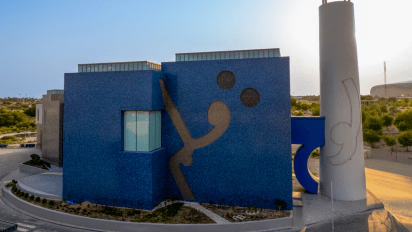
Located at Education City in Doha, the museum’s design is inspired by a sketch from Husain himself, featuring a bright blue façade with apertures resembling Arabic letters and a white column reminiscent of a minaret. Lawh Wa Qalam translates to “canvas and pen,” symbolizing the breadth of Husain’s creative expression.
Interest in Husain’s work has surged recently, reflecting both the growth of the Indian art market and global fascination with non-Western Modernism. Earlier this year, a 14-foot-wide mural from 1954 discovered in Norway sold for $13.8 million at Christie’s New York, setting a record for Indian art.