
Organised into five thematic chapters, the book covers migration history, resistance through music, learning and genre formation, gender dynamics, and the global connections of diaspora music
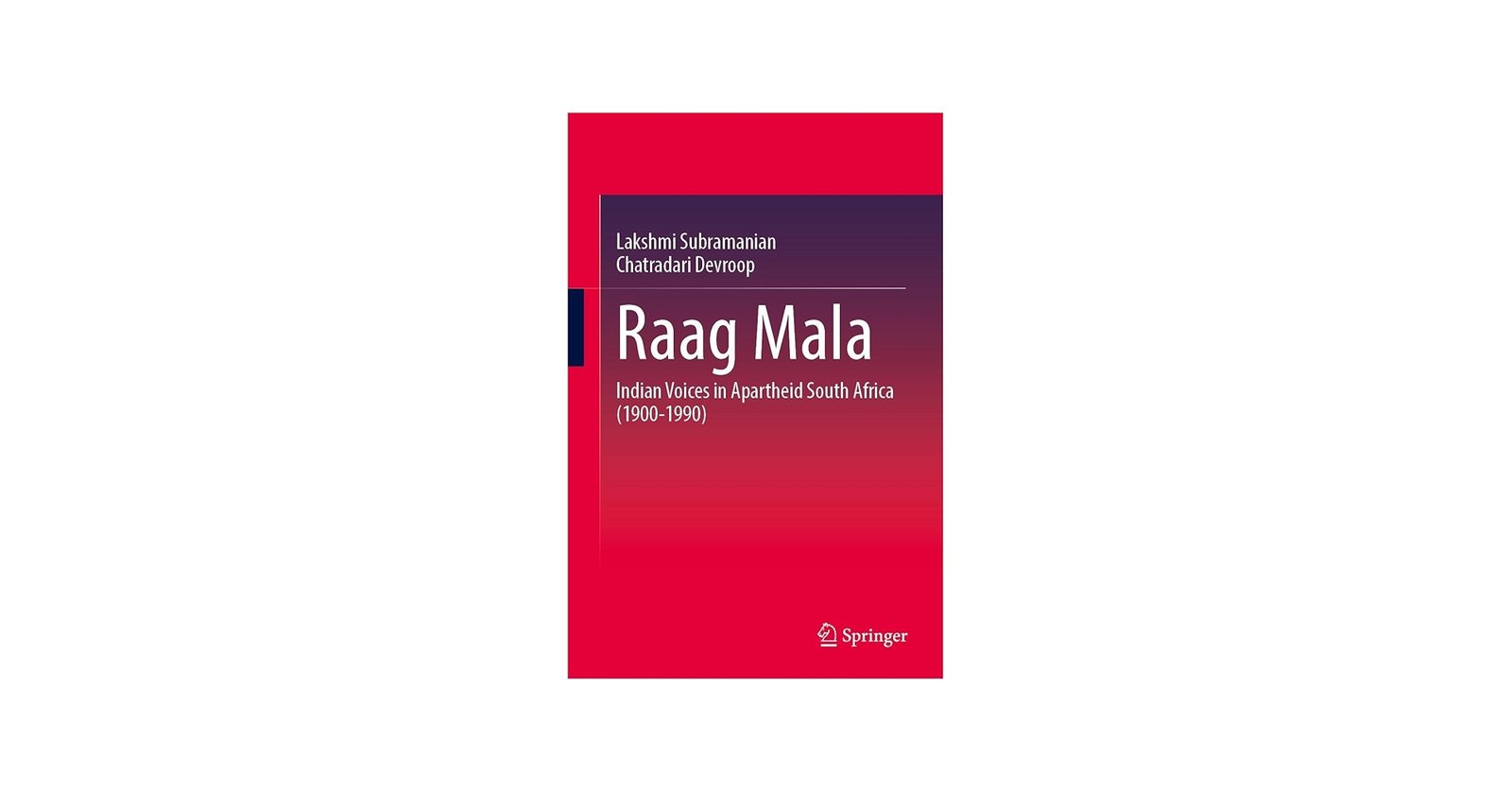
A new book titled Raag Mala – Indian Voices in Apartheid South Africa (1900–1990) explores how music helped Indian communities in South Africa preserve their identity and resist racial segregation during the apartheid era, wrote Gerrit Bester in tut.ac.za.
Co-authored by Prof Chatradari Devroop of the Tshwane University of Technology and Prof Lakshmi Subramanian of India, the book brings together decades of research, interviews and historical insights into the musical lives of Indian South Africans.
The title Raag Mala, which refers to a garland of melodies in Indian classical music, reflects the authors’ aim to weave together many musical stories into a single narrative. The book looks at how strict apartheid laws affected social life and cultural expression, and how music became a powerful tool for self-expression and quiet political protest.
According to Prof Devroop, Indian South Africans developed a unique musical style despite limited access to formal training and resources. The book traces the growth of genres such as qawwali, film music, jazz and dance music, showing how artists adapted to restrictions while keeping their traditions alive. It also highlights the role of technology in music learning and how it influenced creativity and performance.
Gender issues are another key theme, with the authors discussing the challenges faced by women musicians in a male-dominated industry. Through 40 in-depth interviews, the book captures personal stories of artists who used music to express identity, challenge discrimination and connect across cultures.
Organised into five thematic chapters, the book covers migration history, resistance through music, learning and genre formation, gender dynamics, and the global connections of diaspora music. Compiled over ten years, the work involved careful verification with interviewees and their families, making it a valuable resource for researchers, students and music lovers interested in diaspora studies and cultural history.