
-
Shigmo is not just a celebration; it marks the rhythm of farming life and the arrival of spring
-
It helps preserve folk traditions, strengthens community ties and keeps Goa’s cultural heritage alive for future generations
Every spring, usually in late February and March, Goa bursts into life with Shigmo, a traditional harvest festival filled with music, dance, colour and community celebrations. More than just a seasonal event, Shigmo reflects Goa’s agrarian roots and its rich tradition of storytelling through performance and public processions.
Shigmo is celebrated for about two weeks, beginning around the ninth day of the Hindu lunar month of Phalgun and continuing beyond the full moon. The dates often overlap with Holi, adding to the festive mood. While the festival is mainly observed by Hindu communities such as the Kunbis, Gawdas and Velips, its public parades now attract people from across Goa’s towns and villages.
-
There are two main forms of the festival. Dhakto Shigmo, or small Shigmo, is celebrated in villages with folk songs and dances performed in community spaces
-
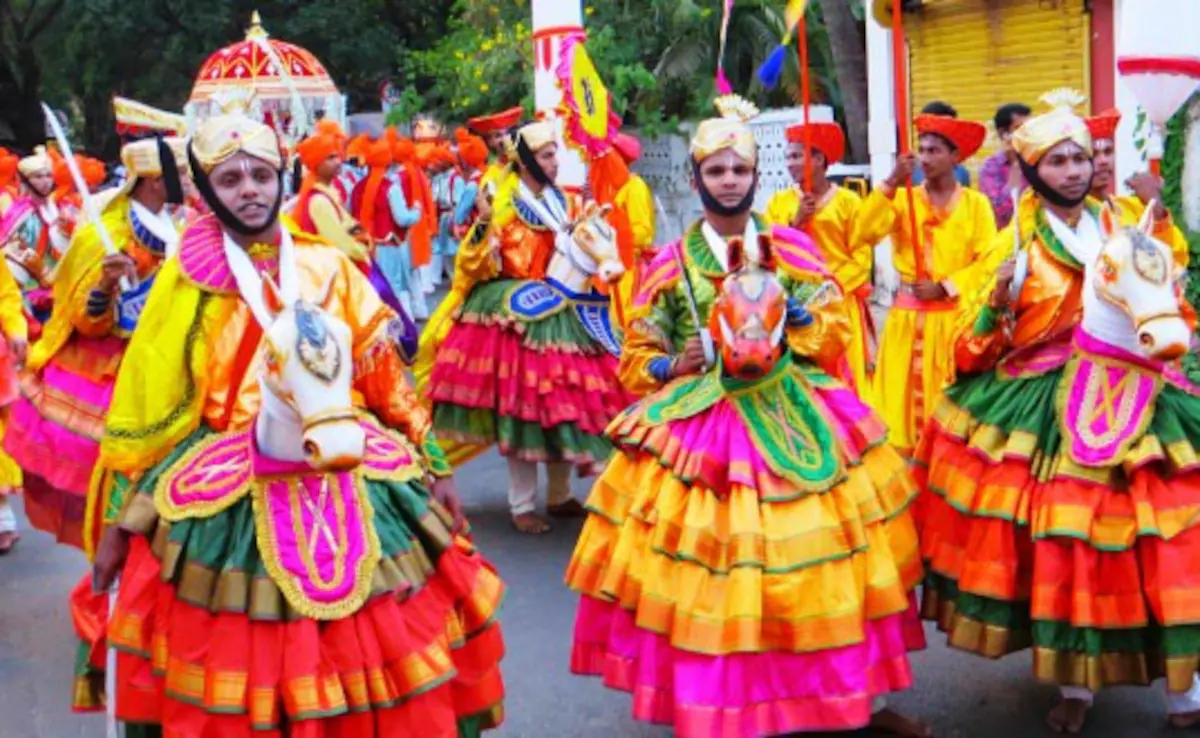
Vhadlo Shigmo, or big Shigmo, features large street processions, decorated floats and cultural performances that draw huge crowds
The origins of Shigmo are linked to ancient folklore, including tales of warriors returning from battle, stories of Lord Krishna and the symbolic end of winter. Celebrations begin with devotional songs to local deities, followed by colourful processions known as Romtamel. Dancers perform traditional forms such as Fugdi, Dhalo, Ghode-Morni and Veerbhadra, accompanied by instruments like dhol, tasha and ghumat. Rituals such as trance dances, fire-walking and night-long performances add to the spiritual and cultural depth of the festival. Participants also throw coloured powders, creating a joyful and lively atmosphere.
Food plays an important role during Shigmo. Families and vendors prepare traditional dishes like puran poli, neureos, chana usal, sannas and sol kadhi, along with Goan favourites such as vindaloo, sorpotel, fish curries and local feni. Sharing meals strengthens social bonds and brings communities together.