
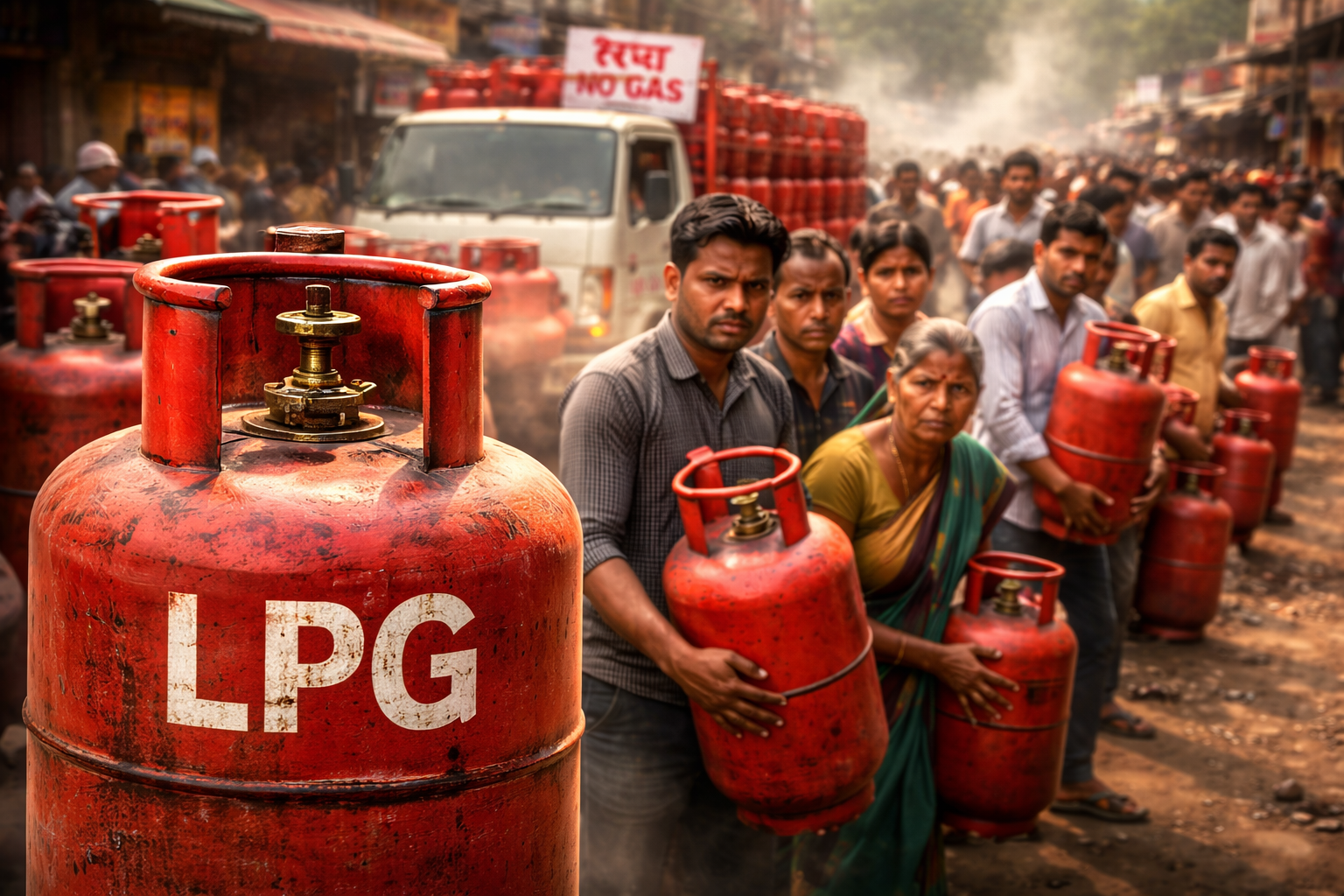
India’s cooking gas crisis is more than a supply chain disruption. It is a reminder of how global conflicts ripple into local lives, turning distant wars into domestic worries. And yet, amid shortages and shutdowns, the flame persists — in kitchens, in stalls, in restaurants — a testament to resilience in the face of scarcity.
Last night, I panicked barely 25 seconds into a phone call with my son in Toronto.
He asked, “Do you have an induction cooktop?” I said no.
“Why?” I asked.
His reply unnerved me. “The US-Israel war against Iran has disrupted oil and gas supplies, sparking a cooking gas crisis in India.”
After we hung up, I opened shopping apps on my phone in haste. Amazon and Flipkart showed induction and infrared cooktops of Chinese and Indian brands as “sold out.” Other sites echoed the same: “currently unavailable” even at inflated prices.
The silence of those words staring at me from the phone screen past midnight felt heavier than the noise of the public chaos in India following the global energy crises.
Across India, that silence is spreading. In Delhi, Mumbai, and Bengaluru, households are waiting days for LPG cylinder deliveries. Booking slots vanish within minutes, and panic buying has begun. Families are stretching meals, cooking less, or turning to firewood.


The crisis has leapt from kitchens into restaurants: in Mumbai, several mid-range eateries have shut their kitchens temporarily, while in Bengaluru, cafés and canteens have introduced “crisis menus” with fewer items.
Some establishments have doubled menu prices, passing the burden to customers who now pay twice as much for the same plate of biryani or dosa.
Street vendors, the lifeblood of India’s food culture, are improvising. Some switch to kerosene stoves, others to firewood, altering taste and hygiene. A chai stall owner in Delhi summed it up: “The flame is weak, but the demand is strong. I cannot stop serving.”
His words capture the resilience of small businesses caught in a storm far beyond their control.
The storm’s epicenter lies thousands of miles away. Iran has halted Very Large Crude Carriers (VLCCs) in the Strait of Hormuz, choking a passage that carries around a quarter of the world’s seaborne oil and a fifth of global LNG.
“The shipping bottleneck (in the Strait of Hormuz) has begun affecting several Indian cities, triggering long queues at LPG distribution centres as households and businesses rush to secure cooking gas refills,” a Times Now report said today.
For India, the world’s second-largest LPG importer, the blockade is devastating. Analysts estimate that India’s annual LPG imports of roughly 17 million tonnes could fall by 20–25% if the halt persists. That translates into millions of missing cylinders, each one a silent gap in a household’s daily routine.
The federal government has scrambled to respond. Under the Essential Commodities Act, gas allocations to fertiliser, power, and manufacturing industries have been slashed, with household supply prioritised.
Domestic LPG refills are now restricted to a 25-day cycle to ration demand. At the same time, India is diversifying imports, sourcing oil and gas from more than 40 countries to reduce dependence on Gulf routes.
Refiners like Reliance have been asked to boost LPG output domestically, though industry insiders warn that capacity is limited.
Policy decisions, however, cannot erase the human anxiety of an empty cylinder.
In Bengaluru, a young mother waits for a refill that is already five days late. In Mumbai, a restaurant owner calculates whether to close for a week or raise prices again. In Delhi, a student cooks on a shared stove, rationing meals with roommates.
Each story is a flicker in a larger flame — fragile, uncertain, yet determined to survive.
India’s cooking gas crisis is more than a supply chain disruption. It is a reminder of how global conflicts ripple into local lives, turning distant wars into domestic worries. And yet, amid shortages and shutdowns, the flame persists — in kitchens, in stalls, in restaurants — a testament to resilience in the face of scarcity.