
February 20, 2026
NASA moves a step closer to launching Artemis II after a successful full-scale rehearsal of its powerful Space Launch System at Kennedy Space Center, strengthening confidence in America’s next crewed mission around the Moon
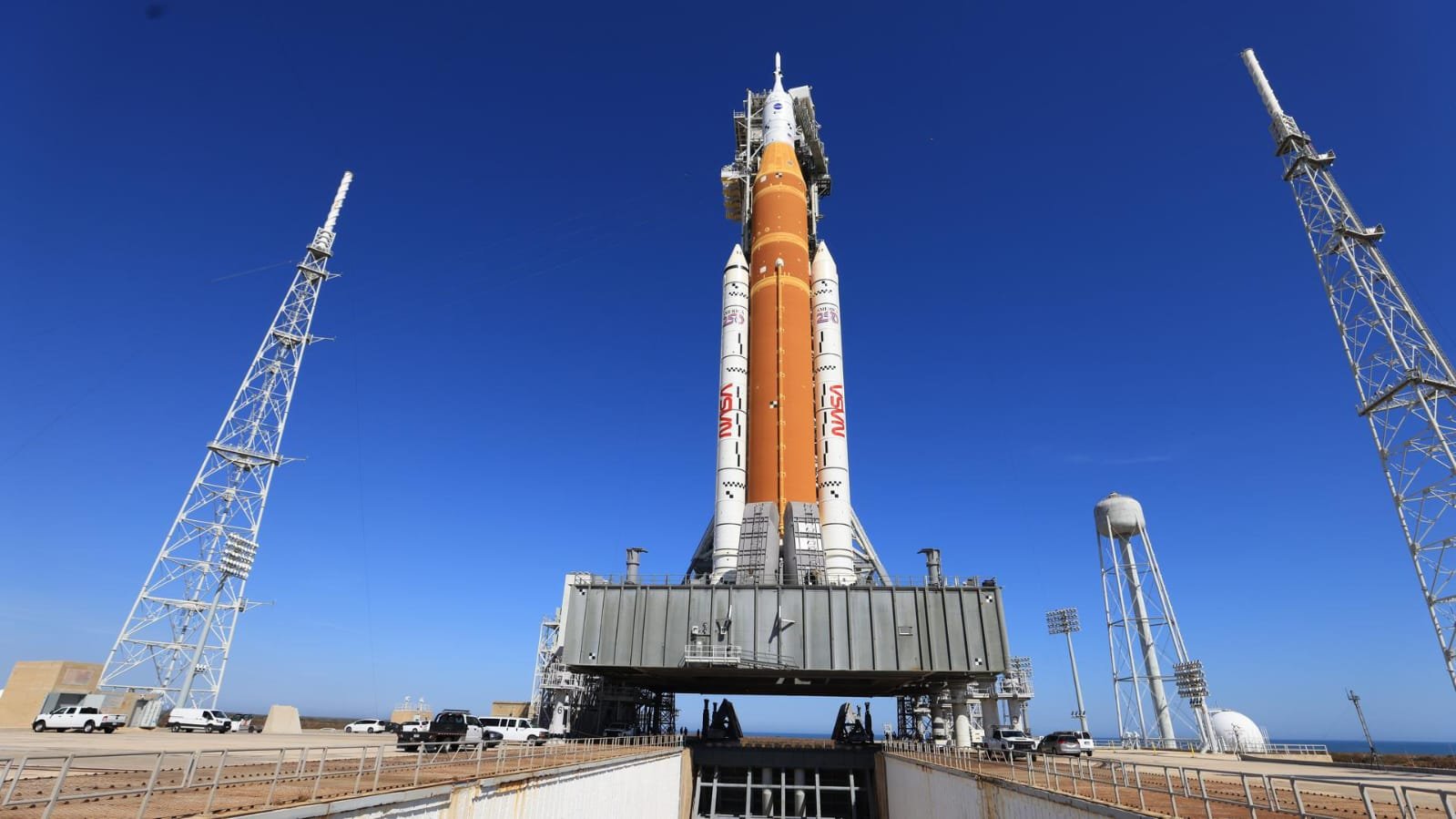
NASA completed a key launch rehearsal for Artemis II on Thursday, successfully fuelling the Space Launch System (SLS) rocket and running two terminal countdown tests at the Kennedy Space Center.
Engineers loaded more than 700,000 gallons (2.65 million litres) of liquid propellant into the rocket, sent a closeout crew to seal the Orion spacecraft’s hatches, and executed two full terminal count runs. The Artemis II astronauts observed part of the exercise from the Launch Control Center.
Teams closely tracked liquid hydrogen operations, a recurring challenge in earlier tests. Hydrogen gas levels stayed within limits, boosting confidence in new seals installed on a key fuel‑routing interface, NASA’s Rachel H. Kraft reports.
A brief loss of ground communications early in fueling forced operators to switch to backup systems before normal channels were restored. Engineers later isolated the faulty equipment, Kraft writes.
The Artemis II crew is set to enter quarantine late Friday in Houston. NASA has not announced a launch date, but the 14‑day quarantine preserves flexibility for a March window
NASA will brief reporters on the wet dress rehearsal at 11 am EST Friday (9.30 pm IST tonight) on its YouTube channel.
In the next few days, technicians will use cranes to position temporary access platforms on the mobile launcher. The platforms will allow teams to reach the SLS booster segments and core stage intertank to service and retest the flight termination system to meet Eastern Range safety rules. The platforms, developed after Artemis I, let NASA complete end‑to‑end safety checks at the pad instead of rolling the rocket back to the Vehicle Assembly Building.
The closeout crew will run another practice session to sharpen procedures.
NASA says Artemis marks a new phase of US exploration, laying the groundwork for future crewed missions on the Moon and, eventually, Mars.