
-
Bread occupies a position of pre-eminence for the way in which it addresses hunger, feeds the body, sustains and ensures the continuity of life
-
It is the most primary or basic food known to man in most cultures around the world, perhaps the reason why it is held in awe and reverence as something sacred; a gift from the gods
As the most primary or basic food known to man in most cultures around the world, bread occupies a position of pre-eminence for the way in which it ends hunger, feeds the body, sustains and ensures the continuity of Life. And perhaps this is why it is held in awe and reverence as something sacred; a gift from the gods.
More importantly, bread became a binding agent in the formation of early human societies. From the Fertile Crescent where wheat was first cultivated, which then spread north and west, to Europe and North Africa, and east toward East Asia.
This in turn brought about lifestyle changes as people gave up their nomadic, hunter—gathering ways for a more settled way of life based on agriculture.
But our focus is less about the historical perspective and focuses more on the different kinds of breads made in
Iran and India.
Bread occupies a central place in everyday meals. Iranian rotis are more than just a staple food. Their size, shape and baking methods reflect the country’s culinary identity and communal dining culture.
Unlike India, where rotis are usually small and round, Iranian flatbreads are strikingly large in size and prepared using unique techniques.
Some of these breads measure up to two or three feet in length and thin like a bedsheet Indeed in many households, a single roti is sufficient for an entire family. The variety, and baking methods of Iranian breads make them stand out globally.
-
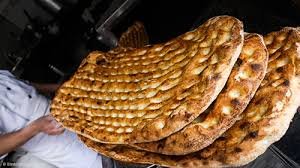
First and foremost you have ‘sangak’, The most widely consumed bread in Iran, regarded as the country’s national bread
-
It is made from fermented wheat flour dough, sangak is rectangular or triangular rather than round
-
It is typically two to three feet long and about a foot wide
The dough is placed directly on heated river stones, giving the bread a rough surface, a lightly crisp texture as well as a subtle smoky flavour.
Barbari is another popular bread, eaten at breakfast with butter, cheese or honey, and rich stews. It is oval-shaped and thicker than sangak, with a soft interior and a golden-brown crust. It is often topped with sesame seeds or black cumin seeds.
Taftoon is a softer variety of Iranian bread with a mildly sweet taste. It is prepared using flour, milk, yogurt, sugar and ghee, along with aromatic spices. The dough is baked in a tandoor, and is often compared to the Indian rumali roti. Its softness makes it ideal for quick meals and street food.
Iran also has several regional breads. Komaj is a sweet bread made with dates, naan-e-jo is prepared from barley flour, sheermal is a milk-based sweet bread, naan-e-sabzi includes herbs and vegetables, and naan-e-sabjamini is made using potatoes.
India also boasts of a huge diversity of traditional breads, with over 30 distinct types across its various regions. These breads are categorized by their preparation methods (baked, fried, griddled, or steamed) and the type of flour used (wheat, rice, millet, or lentils).
The most common types of Indian breads include:
- Flatbreads (Griddled or Roasted)
- Roti / Chapati: The most common daily staple, made from whole wheat flour (atta) and water, cooked on a flat griddle called a tawa.
- Phulka: A variation of roti that is finished over an open flame, causing it to puff up like a balloon.
- Paratha: A layered or stuffed flatbread. Common fillings include potatoes (aloo), cauliflower (gobi), or paneer.
- Thepla: A spiced Gujarati flatbread often made with fenugreek leaves (methi) and millet flour.
- Bhakri: A round, thick flatbread popular in Maharashtra and Gujarat, typically made from coarse grains like jowar (sorghum) or bajra (pearl millet).
- Rumali Roti: Known as “handkerchief bread,” is an extremely thin, large flatbread stretched by hand and baked on an inverted gridle.
LEAVENED BREADS (BAKED OR TANDOORI)
- Naan: A famous leavened bread traditionally baked in a clay oven (tandoor). It can be plain or flavored with garlic and butter.
- Kulcha: Similar to naan but often leavened with yogurt or baking powder rather than yeast; it is a Punjabi specialty commonly served with chickpeas (chole).
- Sheermal: A saffron-flavored, mildly sweet leavened bread from the Awadhi and Kashmiri regions.
- Taftan: A Persian-influenced, rich, and flakier leavened bread made with milk and eggs.
DEEP-FRIED BREADS
- Puri / Poori: Small, unleavened wheat discs that puff up into golden balls when deep-fried.
- Bhatura: A large, fluffy, deep-fried leavened bread made with refined flour (maida) and yogurt.
- Luchi: A Bengali variation of puri made with refined flour instead of whole wheat, resulting in a lighter colour and softer texture.
RICE & LENTIL-BASED (OFTEN FERMENTED)
- Dosa: A thin, crispy crepe-like bread made from a fermented batter of rice and black lentils, originating in South India.
- Appam: A bowl-shaped South Indian pancake made from fermented rice batter and coconut milk, featuring a soft center and crispy edges.
- Pathiri: A very thin, soft rice flour pancake popular in the Malabar region of Kerala.
Regional Specialties
- Litti: A Bihari specialty consisting of dough balls stuffed with spiced roasted gram flour (sattu) and baked over coal.
- Baati: A hard, unleavened bread ball from Rajasthan, traditionally served with dal and churma.
- Poi / Poee: A Goan whole wheat bread with a hollow center, influenced by Portuguese culinary traditions.
- Thalipeeth: A multi-grain savory pancake from Maharashtra made from a roasted flour mix called bhajani.
(DISCLAIMER: The views and opinions expressed in this article are solely those of the author and do not necessarily reflect the official policy or position of Pravasi Samwad. Pravasi Samwad is not responsible for the accuracy, completeness, or reliability of any information presented.)