

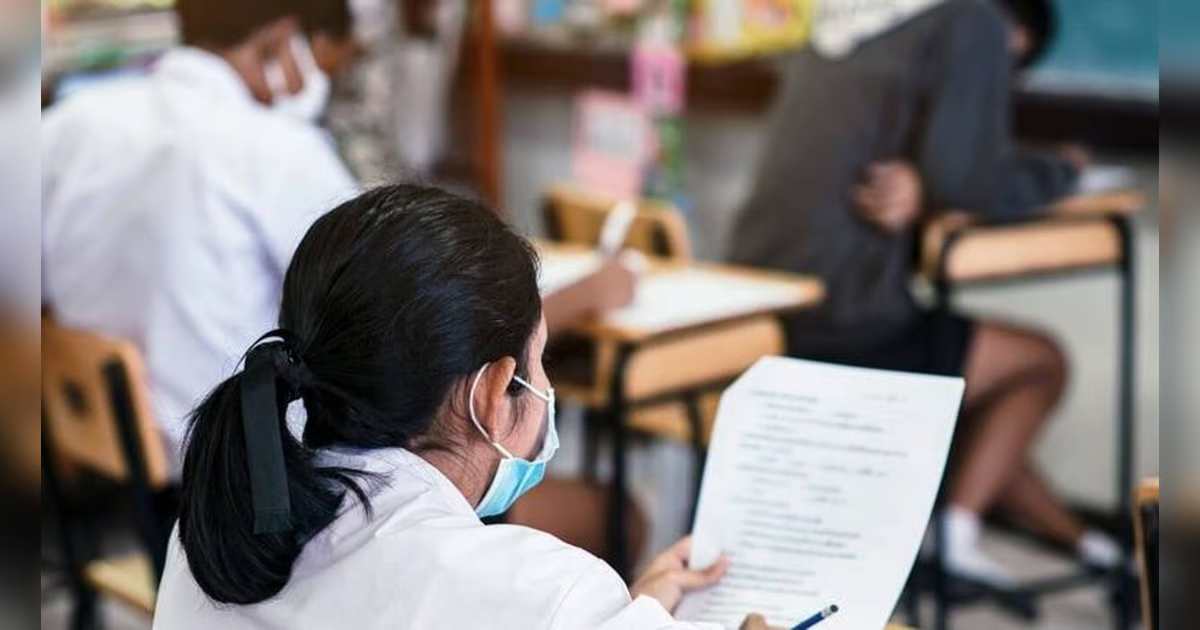
As schools await detailed instructions from the board, administrators are focusing on supporting students through the transition while ensuring university admission processes remain unaffected
Students and educators across the United Arab Emirates are seeking greater clarity after the Council for the Indian School Certificate Examinations (CISCE) cancelled all remaining ICSE (Class 10) and ISC (Class 12) board examinations for 2026 in the country.
The decision follows weeks of uncertainty after multiple exam postponements beginning in early March. In a circular issued to school principals, CISCE confirmed that all pending and postponed examinations scheduled between March 16 and April 6 would no longer take place. The board cited the regional security situation as the primary reason for the move.
The cancellation was reportedly made in coordination with Dubai’s Knowledge and Human Development Authority (KHDA) and the Consulate General of India in Dubai, with authorities emphasising that student safety remains the top priority.
· While the announcement brought relief to many families who were concerned about travel and safety during the exam period, it also raised fresh questions about how final results will be calculated
· CISCE has indicated that results will be determined through an alternative assessment mechanism, although details of the evaluation framework have yet to be announced
School leaders across the UAE welcomed the decision but stressed the need for transparent communication. Educators say students who spent months preparing for the exams are now anxious about how their academic performance will be assessed, particularly those applying to universities that require final board scores.
Many Grade 12 students are especially concerned about conditional university offers, which often depend on final examination results. Without the traditional exam structure, students worry that earlier assessments or predicted grades may not fully reflect their academic potential.
Principals have urged the examination board to provide clear guidelines on how results will be calculated, how moderation will ensure fairness and when the results will be announced. Early clarity on improvement exams—which allow students to raise their scores—would also help families plan ahead.
Despite the uncertainty, educators say there is confidence that CISCE will design a credible and fair evaluation process. During the COVID-19 pandemic, the board implemented alternative grading systems that were widely accepted by universities.
Students themselves have expressed mixed emotions. Many said they were disappointed not to complete the examinations they had spent months preparing for, but acknowledged that safety must remain the priority amid the ongoing regional situation.