

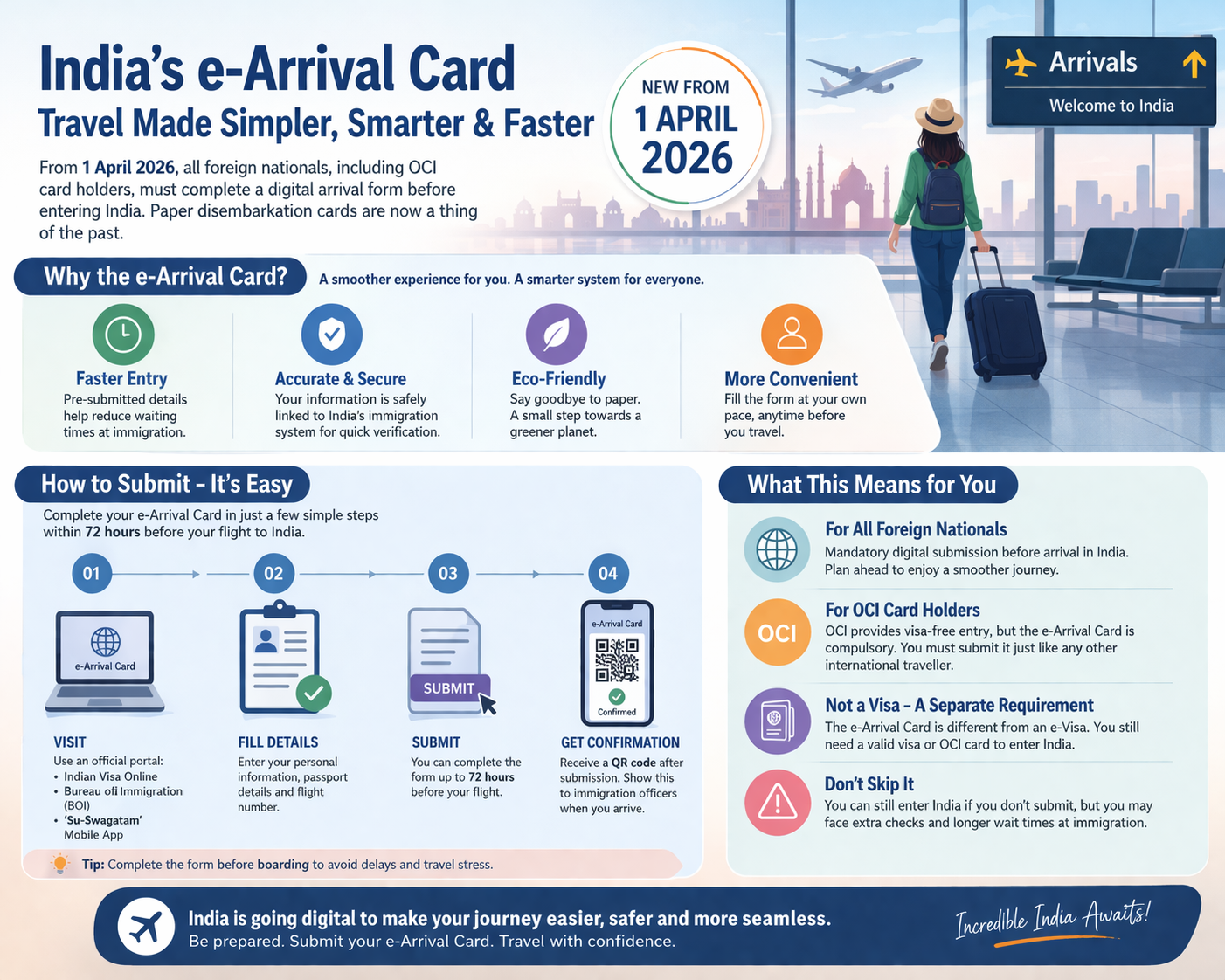
Overall, the system is designed to make travel more efficient and secure. Yet, for foreign nationals, the message is clear: digital convenience comes with the need for better preparation
PRAVASISAMWAD.COM
India’s move to a fully digital airport experience has taken a major step forward with the launch of the e-Arrival Card on 1 April 2026. While the change replaces a simple paper form, its impact on foreign nationals—including Overseas Citizen of India (OCI) card holders—is more significant than it first appears.
The e-Arrival Card is now compulsory for all non-Indian passport holders entering the country. It replaces the disembarkation card once handed out on flights. Travellers must complete the form online within 72 hours before arrival and present a QR code at immigration.
-
For most visitors, the system brings clear benefits. Filling out details in advance reduces paperwork at the airport and can speed up immigration queues
-
It also improves accuracy, as passengers enter their own information rather than relying on handwritten forms
However, the change also places more responsibility on travellers. Foreign nationals must now plan ahead and ensure the form is submitted on time. Those who forget may still be allowed entry, but they are likely to face delays and additional checks.

OCI card holders, who often enjoy smoother entry into India, will also need to follow this new process. While their visa status remains unchanged, they are not exempt from submitting the e-Arrival Card. This marks a shift from a relatively relaxed arrival process to one that is more structured and data-driven.
Another key point is that the e-Arrival Card is separate from a visa. Travellers must still carry a valid visa or OCI card alongside the digital form.