
The situation emphasises the role of community networks in supporting new migrants navigating complex environments
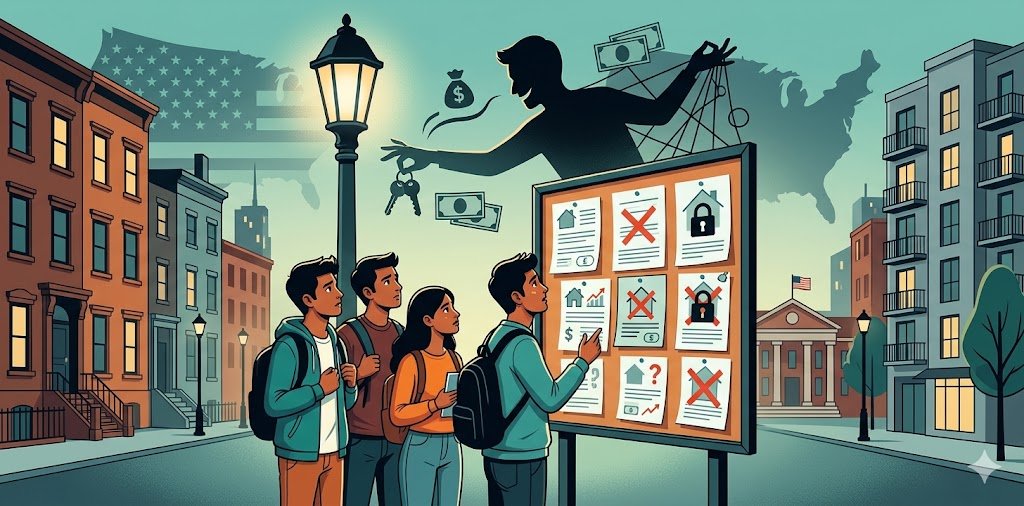
Indian students across major US university cities are increasingly facing fraud risks in the rental housing market, as accommodation shortages continue to intensify. Recent developments indicate a rise in cases where international students, including Indians, have been targeted through fake listings, advance payment scams, and misrepresented property agreements.
The issue is particularly acute in high-demand cities such as New York, Boston, and San Francisco, where rental supply has not kept pace with student inflows. Fraudsters are exploiting the urgency faced by incoming students who often secure housing remotely without physical verification.
Indian student associations have reported a surge in complaints, with victims losing substantial deposits to fraudulent agents or landlords. In response, universities and community organisations are stepping up awareness campaigns, advising students to rely on verified housing platforms and avoid cash transactions.
-
Experts highlight that international students are especially vulnerable due to unfamiliarity with local housing regulations and market practices
-
Legal recourse is often limited, making prevention the most effective strategy
For Indian students, the situation underscores the importance of early planning, verification of property ownership, and engagement with university housing services.
The development reflects broader challenges in urban housing markets and highlights the need for stronger consumer protection measures.