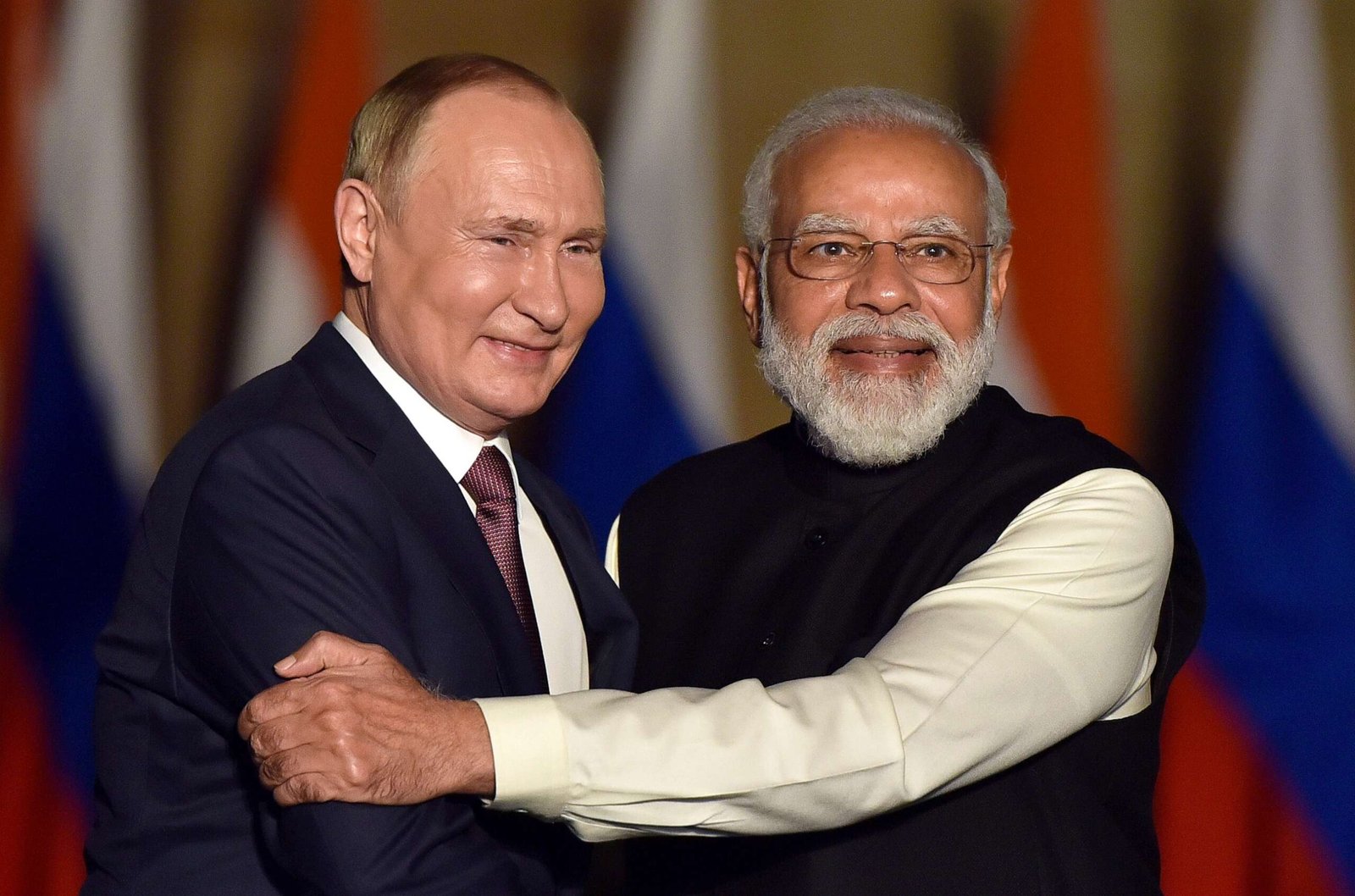
The agreement aims to establish a framework for the recruitment and employment of Indian nationals in Russia, strengthening bilateral labour cooperation
Russian President Vladimir Putin has ratified an agreement with India to facilitate the temporary employment of citizens in each other’s countries, opening the way for a more structured framework for Indian workers seeking jobs in Russia.
Putin signed the relevant legislation on October 12 after the agreement received approval from Russia’s State Duma, the lower house of parliament, on October 1 and the Federation Council, the upper house, on October 2, according to reports.
The agreement was signed by the Indian and Russian governments in New Delhi on December 5, 2025. It establishes arrangements for the temporary employment of Indian and Russian nationals in the other country.
-
Around 70,000 Indian citizens are currently working in Russia, mainly in the construction and textile industries
-
The number is expected to rise to 100,000 by the end of 2026, reflecting the potential for further recruitment, according to a report in The Economic Times
Demand for Indian professionals is also increasing in Russia’s engineering and electronics sectors, broadening the range of industries in which Indian workers could find opportunities.
The agreement marks a step towards strengthening labour mobility between the two countries and providing a formal basis for the temporary movement of workers. Its practical impact will depend on how the framework is implemented and the employment opportunities available to prospective candidates.
For Indian workers considering Russia, the development could create additional avenues for overseas employment. However, prospective applicants should verify job offers, employment terms, visa requirements and the applicable recruitment procedures through authorised channels before making commitments.
The ratification comes amid continuing efforts by India and Russia to expand cooperation across several sectors. Labour mobility is an additional area of engagement, with the potential to connect Russian workforce requirements with India’s large pool of skilled and semi-skilled workers.
Further details on implementation, recruitment procedures and the specific categories of workers covered will be important in determining how quickly the agreement translates into employment opportunities.