
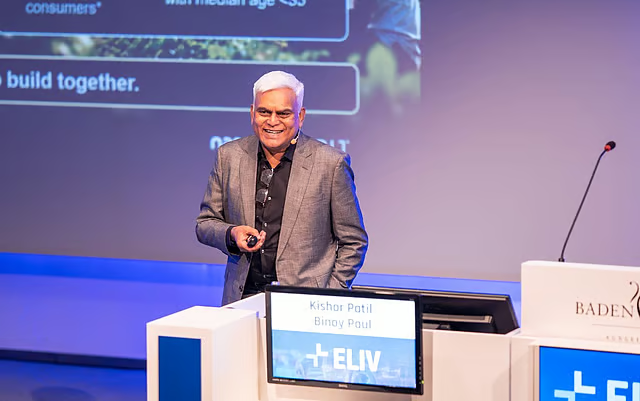
Kishor Patil calls for stronger India-Europe collaboration in mobility technology as the automotive industry prepares for a major transformation
India and Europe could together account for 231 million car sales by 2035, creating opportunities for closer cooperation in automotive technology, digital engineering and next-generation mobility, according to the report on NASSCOM leader Kishor Patil’s proposals for an India-Europe partnership.
The potential expansion of the automotive market highlights the importance of collaboration between the two regions as manufacturers respond to changing consumer preferences, tighter environmental requirements and rapid advances in vehicle technology.
India’s growing automotive and technology sectors could complement Europe’s established automotive manufacturing base and expertise in engineering. Closer cooperation could support the development of connected vehicles, electric mobility solutions, software-defined cars and advanced manufacturing systems.
Technology is becoming increasingly central to the automotive industry. Vehicles now rely on software, sensors, data analytics and digital platforms alongside conventional mechanical engineering. This shift is creating opportunities for technology companies and engineering service providers to work more closely with vehicle manufacturers.
-
For India, collaboration with European companies could strengthen its position in automotive research, product development and digital engineering
-
Indian technology firms could contribute expertise in software development, artificial intelligence, embedded systems and vehicle testing, while European partners could offer experience in automotive design, manufacturing and regulatory compliance
The partnership could also help companies address challenges associated with the transition to electric vehicles, including battery technology, charging infrastructure, energy efficiency and supply-chain resilience.
However, realising the opportunity will depend on sustained investment, compatible technical standards, research partnerships and stronger links between manufacturers, technology companies and academic institutions. Differences in regulations and market requirements will also need to be addressed.
The projected combined sales figure points to the potential scale of the opportunity, but market growth will depend on economic conditions, consumer demand, technology costs and the pace of the transition to cleaner transport.
Stronger India-Europe cooperation could help both regions develop new mobility technologies and create opportunities across manufacturing, engineering and digital services as the automotive industry evolves towards 2035.