
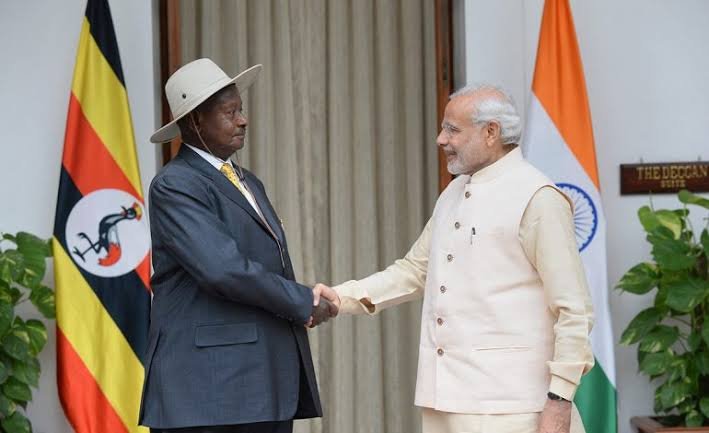
Proposed constitutional recognition would acknowledge the community’s generations-long presence in the East African nation, decades after Idi Amin’s expulsion of Asians in 1972
Uganda is considering recognising its Indian-origin community as the country’s 57th indigenous tribe, a move that could mark a significant milestone in the community’s history and its relationship with the East African nation.
Ugandan Parliament Speaker Jacob Marksons Oboth indicated that the government was looking at granting the community constitutional recognition. He made the remarks while interacting with Indian journalists on the sidelines of the 12th BRICS Parliamentary Forum in New Delhi on October 26 and 27.
“We are looking forward to recognising them as indigenous groups,” Oboth said, referring to the Asian community, which is predominantly of Indian origin.
The proposal follows a longstanding demand by members of the community, many of whom have lived in Uganda for generations. Recognition could also address identity-related difficulties faced by young Asians born in the country, particularly when applying for passports and national identity cards that require applicants to specify their tribe.
The demand gained momentum in 2017 when President Yoweri Museveni hosted Diwali celebrations at State House. Community representatives urged the government to formally recognise them as an indigenous Ugandan group. The appeal was reiterated during subsequent celebrations in 2021 and 2025.
-
The Indian-origin population has a history in Uganda dating back to the 19th century, when traders from Gujarat and Kutch established commercial links in East Africa
-
Indian workers were also brought by the British colonial administration to construct the railway connecting Mombasa to Uganda in the late 1890s
The community’s history was dramatically disrupted in 1972 when former dictator Idi Amin ordered nearly 80,000 Asians to leave Uganda within 90 days. Many families lost their homes, businesses and property.
Museveni’s government later encouraged their return and initiated efforts to restore confiscated properties.
Today, the Indian community remains an important contributor to Uganda’s economy, particularly in trade, manufacturing, banking and agro-processing.
Kenya set a regional precedent in 2017 by recognising its Indian-origin population as the country’s 44th tribe.
Uganda’s proposed recognition, however, remains under consideration and would require constitutional action before becoming official.