
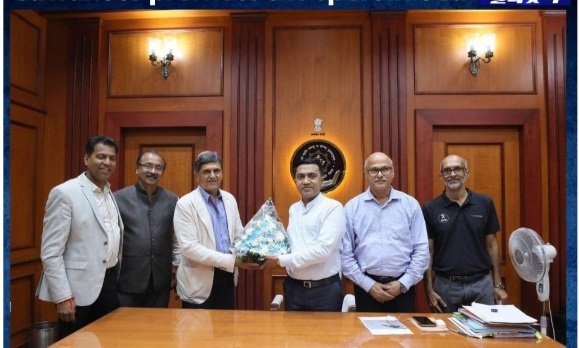
According to Goa Badminton Association president Manoj Patil, the State already has a solid foundation
-
The partnership with Padukone School of Badminton (PSB), he says, is about creating a proper structure where young players can train professionally and pursue the sport seriously without having to leave Goa
PRAVASISAMWAD.COM
Badminton has long been one of Goa’s most loved sports. From busy indoor stadiums in Mapusa and Campal to courts in schools and villages, the game has deep roots in the State’s sporting culture. Over the years, several Goan players have reached the national stage, but building a steady pipeline of elite talent has remained a challenge.
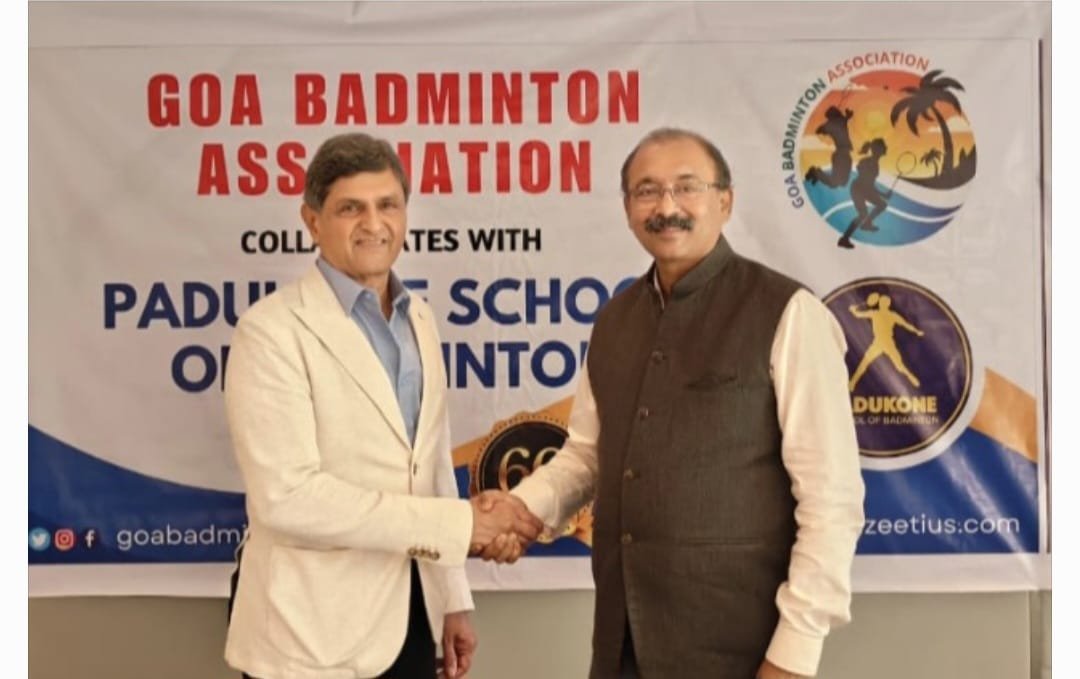
A new partnership between the Padukone School of Badminton (PSB) and the Goa Badminton Association (GBA) hopes to change that. Announced this year, the collaboration aims to create a structured badminton ecosystem in Goa — starting from grassroots participation and moving all the way to elite player development.
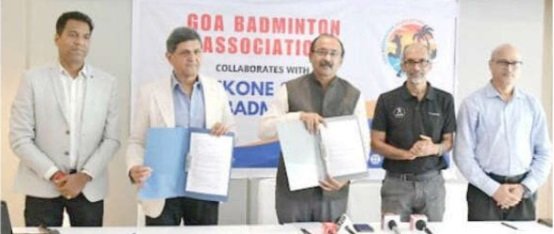
The initiative began with the signing of a two-year Memorandum of Understanding and is designed as a long-term plan to nurture talent, improve coaching standards and create a more professional training environment for badminton in the State. Many within the sport believe this could mark the beginning of a new chapter for Goan badminton.
“I am thrilled to share that in GBA’s 60th anniversary year, we have signed a MoU with the Padukone School of Badminton, led by the legendary Prakash Padukone. This collaboration is a big step towards building a structured badminton ecosystem in Goa — from grassroots programs in schools and panchayats to district-level talent development and eventually preparing players for national and international competitions,” said Manoj Patil, President of Goa Badminton Association.
Commenting on the Association’s vision, he said, “Our vision is to nurture young talent, empower coaches, and make badminton accessible to every child in Goa, while leveraging the excellent infrastructure we already have. The first phase of this plan will roll out in the next 30 to 45 days, and we are confident it will mark a new golden era for badminton in our State.”
“Excited to take Goa badminton to the next level — with each one’s support and blessings!”
Building a System for the Future
The core idea behind the programme is simple: give every child in Goa the chance to play badminton, while guiding the most promising players through a clear pathway to reach national and international levels.
The Padukone School of Badminton, founded by All England champion Prakash Padukone, has developed strong grassroots programmes across India. With more than 75 centres operating in schools, clubs and residential communities, the organisation focuses on expanding participation while maintaining high coaching standards.
In Goa, the aim is to adapt this model to the State’s sporting environment. Instead of concentrating only on a high-performance academy, the programme begins at the grassroots level by introducing badminton in schools and local communities, increasing participation and gradually identifying talented players.
According to Goa Badminton Association president Manoj Patil, the State already has a solid foundation. The partnership, he says, is about creating a proper structure where young players can train professionally and pursue the sport seriously without having to leave Goa.
Using Goa’s Strong Infrastructure
Goa has long been recognised for its strong sports infrastructure. Indoor stadiums such as Peddem in Mapusa, Campal in Panaji, Ponda and Navelim offer multiple badminton courts under one roof — facilities that many larger states still lack.
However, infrastructure alone cannot produce champions. A system that combines coaching, talent identification, competition exposure and athlete support is equally important.
The PSB–GBA collaboration aims to bring these elements together. By connecting grassroots programmes, coaching development and high-performance training, the initiative seeks to create a clear pathway for young players.
Expanding Participation
The first phase of the programme focuses on expanding participation at the grassroots level.
Badminton will be introduced through programmes in schools, panchayats and community spaces. Portable badminton kits — including nets, poles, rackets and shuttlecocks — will allow children to play even where permanent courts are not available.
At this stage, the focus is on participation rather than competition. Children will first be introduced to the sport through simple, play-based activities that build interest and basic skills. Those who show enthusiasm and ability will then move into more structured training.
Increasing the number of players is a key goal. As participation grows, the chances of identifying exceptional talent also improve.
Improving Coaching Standards
Another important part of the collaboration is coach education. While Goa already has experienced badminton coaches, the programme aims to introduce standardised training methods and updated coaching practices.
The Padukone School of Badminton has already trained and certified more than 1,000 grassroots coaches across India. Through workshops and training sessions in Goa, local coaches will learn modern techniques and structured approaches to player development.
Some coaches will also have the opportunity to train at PSB centres in Bengaluru, gaining exposure to advanced training environments.
Former Goa State player and coach Navneet Nasnodkar believes this exchange of knowledge will benefit the sport greatly. As coaching standards improve, he says, the overall quality of training for young players will rise as well.
A Clear Pathway for Players
As grassroots participation increases, the programme will gradually move towards identifying talented players and guiding them through different stages of development.
Promising athletes will first enter district-level training programmes, where they will receive more advanced coaching and competition exposure. From there, the best players will progress to state-level high-performance training.
At the higher levels, training will include strength and conditioning, performance analysis and modern coaching techniques. Technology such as video analysis and performance tracking is also expected to become part of the programme over time.
The aim is not simply to increase the number of players but to ensure that each stage of a player’s development is supported by the right training and resources.
A Long-Term Vision
Looking ahead, the long-term goal is to establish a residential badminton academy in Goa. Such an academy would allow talented young players to train full-time in a professional environment with access to expert coaching and sports science support.
Until then, existing facilities such as the Peddem Indoor Stadium in Mapusa may host advanced training programmes.
If realised, a dedicated academy could attract players not only from Goa but also from across India, strengthening the State’s position as a badminton hub.
Learning from the Past
Goa has produced several players who have represented India internationally, including Leena Pednekar, Tanisha Crasto and Anura Prabhu Desai. However, many of them had to travel or relocate to pursue advanced training.
The new partnership hopes to ensure that future players can develop their skills within the State itself.
According to GBA president Manoj Patil, the vision is clear: to turn Goa into a centre of excellence for badminton by building a strong and sustainable system.
A Model for Sports Development
The collaboration between PSB and GBA could also offer lessons for other sports in Goa. By combining government infrastructure, federation leadership and private technical expertise, the programme demonstrates how partnerships can accelerate sports development.
If successful, similar models could be adopted in other disciplines.
The Rollout Begins
The programme officially began rolling out across Goa in October 2025. The first PSB centre was launched at Salvador do Mundo as the GCE–GBA Centre of Excellence, led by coaches Navneet Nasnodkar, Nilesh Thakur and assistant coach Ayaan Shaikh.
This centre marks the first step in building the structured pathway envisioned under the partnership. Grassroots initiatives, coaching workshops and talent identification programmes are gradually taking shape across the State.
The journey ahead will take time, but for many in Goa’s badminton community it represents an important step forward.
For the young players practising on courts across the State every evening, the initiative brings new hope. In the future, aspiring champions may no longer need to leave Goa to pursue their dreams.
If the vision behind the PSB–GBA partnership unfolds as planned, the shuttle that first took flight in October 2025 could carry Goan badminton into a bright new era.