

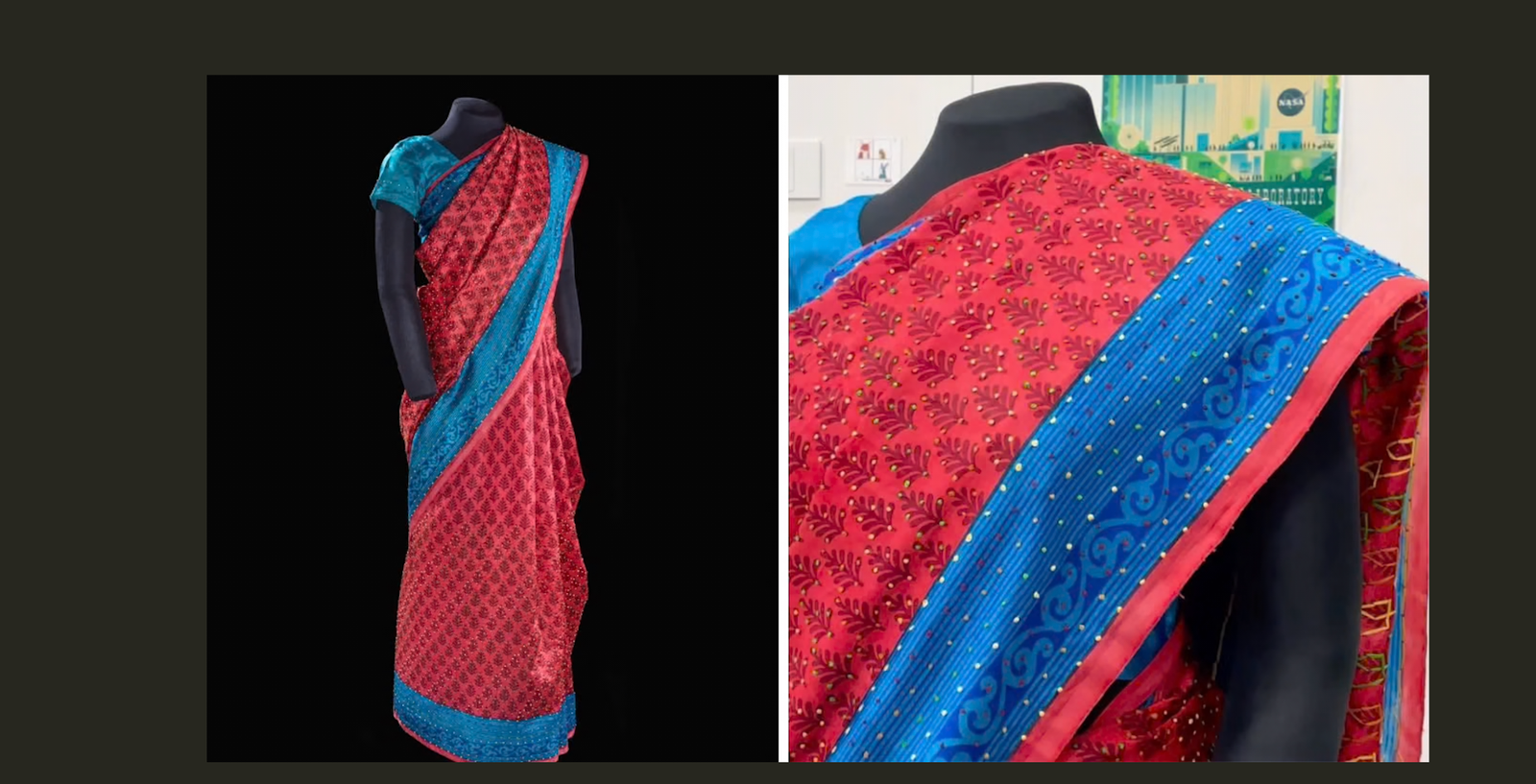
Garment worn by Mangalyaan scientist Nandini Harinath joins museum collection, highlighting India’s achievements in space exploration and the role of women in science
A saree worn by Indian Space Research Organisation (ISRO) scientist Nandini Harinath during India’s historic Mars Orbiter Mission has been added to an exhibition at the Smithsonian National Air and Space Museum in Washington, D.C.
The red-and-blue saree, worn during a key moment in the Mangalyaan mission, has been included as part of the museum’s efforts to document significant milestones in global space exploration. The display features the garment alongside archival material related to the mission.
The Smithsonian described the saree as a vibrant piece reflecting both India’s scientific achievements and its cultural identity. The inclusion recognises the contribution of Harinath, who served as deputy operations director for the Mars Orbiter Mission and played a key role in mission planning and operations.
Launched by ISRO in November 2013, Mangalyaan marked a major achievement for India’s space programme. In September 2014, India became the first Asian nation to successfully enter Martian orbit and the first country in the world to do so on its maiden attempt. The mission also established India as only the fourth space agency globally to reach Mars.
Originally designed to operate for between six and ten months, the spacecraft exceeded expectations by remaining functional for nearly eight years, collecting valuable data on the Martian surface and atmosphere
The images of women scientists in colourful sarees working inside ISRO mission control gained international attention during the mission. Many viewed them as challenging conventional stereotypes about scientists and engineers, while highlighting the growing role of women in India’s space sector.
Harinath, who has contributed to more than 14 space missions during her career, has previously credited her interest in space exploration to childhood influences, including the television series Star Trek and the film Apollo 13.
The Smithsonian’s decision to preserve the saree reflects the wider legacy of Mangalyaan, recognising not only a technological achievement but also the cultural and human stories behind one of India’s most celebrated space missions.