

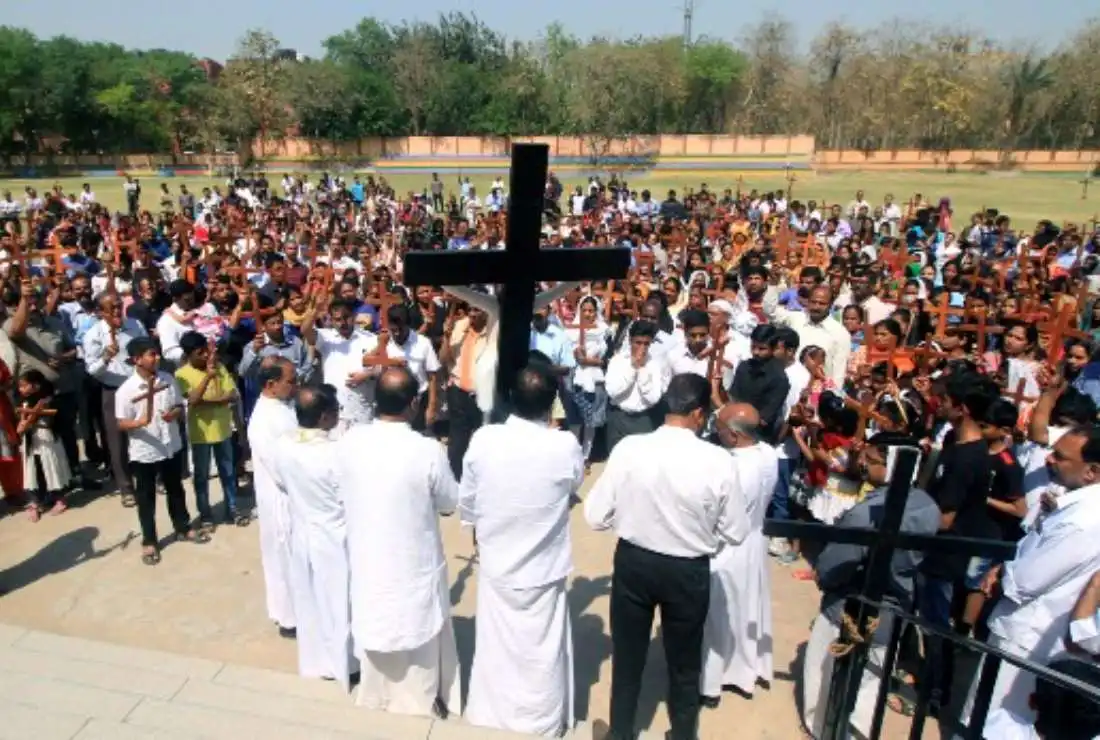
Police action in Chhattisgarh has renewed concerns over the use of anti-conversion laws and religious freedom
Police in the central Indian state of Chhattisgarh have arrested organisers of a Christian convention on allegations of carrying out unlawful religious conversions, prompting renewed debate over the enforcement of anti-conversion laws and the protection of religious freedom.
According to Christian advocacy organisation Open Doors UK, the arrests took place after a gathering attended by Christian believers was disrupted by local authorities following complaints from members of the surrounding community. Police subsequently detained several organisers, accusing them of attempting to convert people through the event.
The detained individuals have denied the allegations, while Christian groups have maintained that the convention was a routine religious meeting involving worship, prayer and fellowship rather than an event intended to induce conversions. Support organisations have called for a fair legal process and urged authorities to uphold constitutional protections for freedom of religion.
-
The incident comes amid continuing scrutiny of anti-conversion legislation in several Indian states, including Chhattisgarh and Uttar Pradesh
-
Human rights organisations and church groups have argued that such laws are increasingly being invoked against Christians during prayer meetings and religious gatherings, while state authorities maintain that the legislation is intended to prevent conversions through force, fraud or inducement
Open Doors UK said the latest arrests reflect growing pressure faced by some Christian communities in parts of India. The organisation has appealed for the release of those detained and called for dialogue, peaceful coexistence and respect for the rights of people of all faiths.
India’s Constitution guarantees freedom of religion, although several states have enacted laws regulating religious conversions. The latest case is expected to add to ongoing legal and public discussions over the implementation of those laws and the balance between preventing coercive conversions and safeguarding religious liberty.