
Court examines whether students sponsored by NRIs should have to prove they were raised or cared for by their sponsors to qualify under the NRI quota.
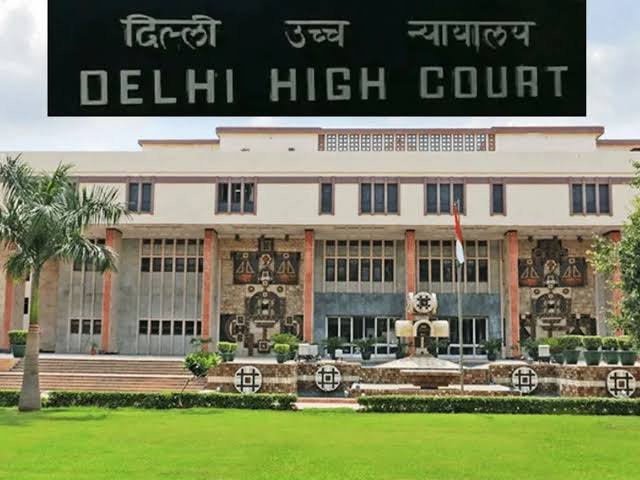
The Delhi High Court has questioned the need for non-resident Indian (NRI) sponsors to prove they have personally cared for a student as a guardian before the student can qualify for admission under the NRI quota following the NEET-UG examination.
Justice Jasmeet Singh said the requirement appeared to introduce a subjective test, with the outcome potentially varying from one case to another.
The court made the observation while directing authorities to allow a NEET-UG 2026 candidate to take part in ongoing NRI quota counselling. The permission is conditional on the candidate submitting an affidavit from his proposed NRI sponsor, along with documents showing the sponsor has the financial means to cover his education.
-
The case concerns a candidate who secured the required NEET-UG 2026 cut-off marks
-
His maternal uncle, who lives abroad, had agreed to pay for his coaching, examination and MBBS course
The candidate challenged a notice issued by the Medical Counselling Committee (MCC) in May, which introduced additional conditions for NRI sponsors and nearest relatives seeking to support students under the quota.
Under the notice, sponsors must ordinarily reside abroad and demonstrate that they have looked after the student as a guardian. Supporting evidence and an affidavit must also be submitted to the Committee.
The candidate argued that these conditions prevented him from participating in counselling. He also said obtaining a formal guardianship order could be time-consuming.
The Union government opposed interim relief, arguing that the requirements were intended to prevent bogus or manufactured claims and that court intervention could disrupt the counselling schedule.
The High Court, however, found that the candidate had established a prima facie case. It said denying him the opportunity to participate could cause irreparable loss if he was ultimately found eligible for NRI quota admission.
The court observed that authorities’ immediate concern should be ensuring that admissions are not secured through fraudulent documents. It held that, at the interim stage, a sponsor’s affidavit and adequate proof of financial capacity would address that concern.
The candidate’s participation will remain subject to the final outcome of the petition.
Case: Anish Sandeep Patil (Minor) Through His Father Sandeep Hemant Patil v. Union of India & Ors.