
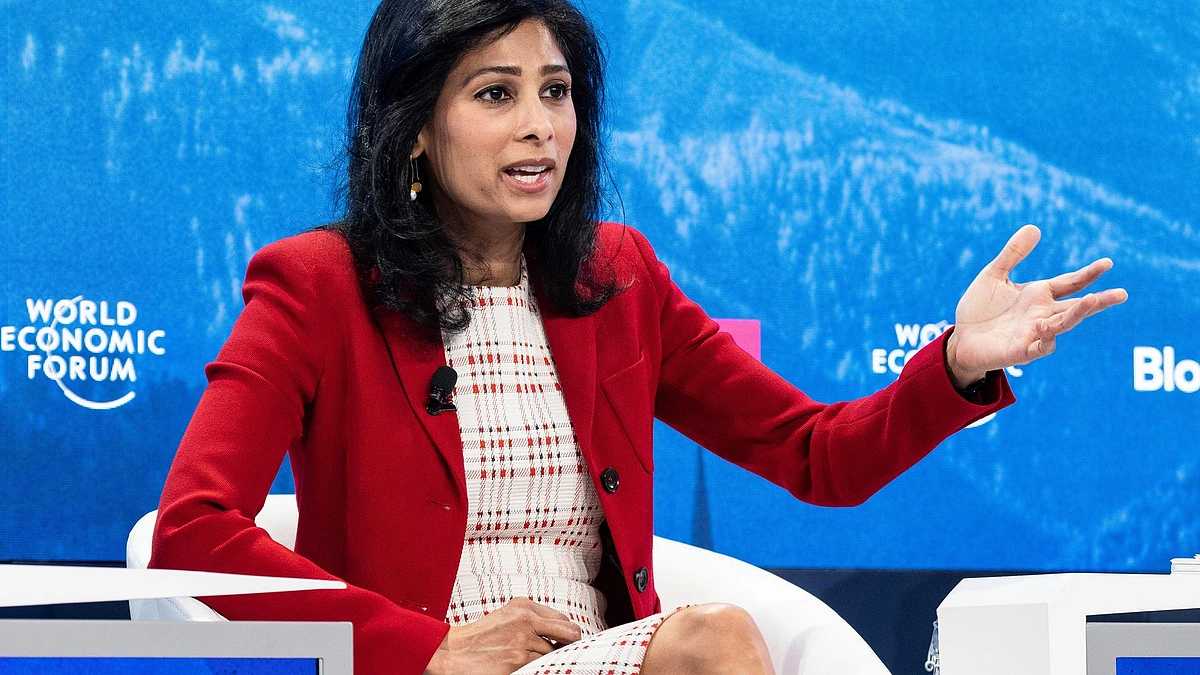
The former IMF chief economist cautions that improved growth forecasts for India and Germany do not remove wider risks facing the world economy
The global economy remains in a precarious position despite improved growth projections for countries such as India and Germany, Gita Gopinath, former First Deputy Managing Director of the International Monetary Fund (IMF), has warned.
The assessment highlights the uncertainty surrounding the global outlook, as stronger growth expectations in some major economies coexist with risks from geopolitical tensions, trade disruptions and persistent economic imbalances.
India’s growth prospects remain important for the global economy, given its position as one of the world’s major emerging markets. Germany, meanwhile, is a key European economy whose performance influences industrial production, trade and demand across the region.
However, upward revisions to economic forecasts do not necessarily indicate that the broader international environment has become stable. Growth projections can improve while businesses, investors and governments continue to face uncertainty over trade policies, supply chains and the direction of global demand.
-
For emerging economies, including India, external developments can affect exports, capital flows, currency movements and investment decisions
-
Changes in energy prices and international interest rates can also influence inflation and borrowing costs
Gopinath’s warning underlines the distinction between improved growth estimates and a sustained recovery. While stronger domestic demand and investment can support economic activity, external shocks may undermine confidence and complicate policy decisions.
Germany’s economic outlook is particularly significant for Europe, where industrial competitiveness and weak demand have remained concerns. A sustained improvement in the country’s performance could support regional growth, although wider trade and geopolitical risks remain relevant.
For policymakers, the challenge is to maintain economic momentum while preparing for potential disruptions. Governments must balance measures to encourage investment and employment with efforts to preserve financial stability and manage public finances.
For India, a relatively strong growth trajectory offers opportunities, but continued global uncertainty makes export diversification, domestic investment and economic resilience important priorities.
The broader message is that improved forecasts should be viewed cautiously. The direction of global growth will depend not only on individual countries’ performance but also on how governments and markets respond to international economic and political pressures.
The IMF’s October 2026 outlook projects global growth at 3.1% in 2026, down from 3.5% in 2025, before a modest recovery to 3.4% in 2027. It also expects inflation to rise to 4.7% in 2026 before easing the following year.