
NABARD-backed project demonstrates potential of multispecies fish farming to revive saline-affected agricultural land
A pilot aquaculture project conducted on Goa’s traditional Khazan lands has yielded encouraging results, highlighting a potential new livelihood opportunity for farmers struggling with declining agricultural productivity in coastal areas.
The experimental fish farming trial was carried out at Merces under a project funded by the National Bank for Agriculture and Rural Development (NABARD) and implemented by the ICAR-Central Coastal Agricultural Research Institute (CCARI), Goa. The initiative aims to evaluate the performance of multispecies finfish culture in low-cost ponds located in salt-affected coastal regions.
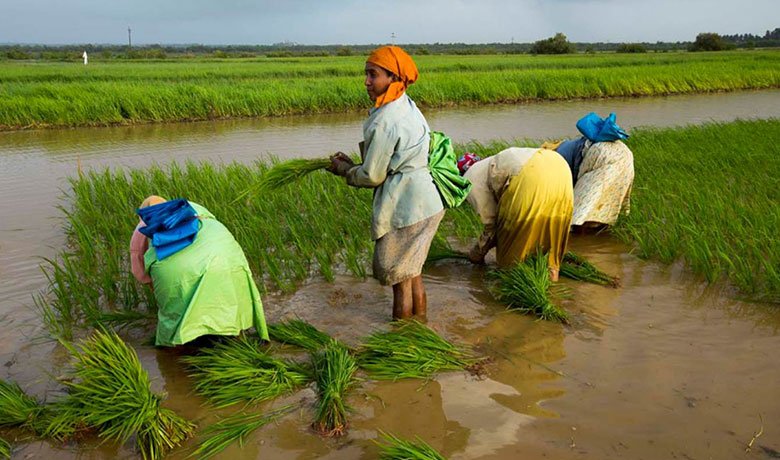
Khazan lands, Goa’s reclaimed estuarine ecosystems, face several challenges, including soil acidity, saltwater intrusion, prolonged fallow periods and falling crop yields. Traditional paddy cultivation on these lands has become increasingly uneconomical, prompting researchers to explore integrated aquaculture as an alternative source of income.
The trial was conducted in collaboration with local farmer Joaquim D’Souza. Two ponds covering 360 square metres and 300 square metres were prepared and stocked with various fish species in April 2025. These included Catla, Rohu, Pearlspot, Pacu, Tilapia and Pangasius. Additional stocking was carried out in October 2025 to improve productivity.
-
After 329 days of culture, researchers conducted a partial harvest to assess fish growth and overall performance
-
Pond 1 produced 80 kilograms of fish, including Catla, Rohu and Pangasius, while Pond 2 yielded 62 kilograms, comprising Pacu and Pangasius
The harvest translated into an estimated productivity of about 2.2 tonnes per hectare in Pond 1 and 2.0 tonnes per hectare in Pond 2. Researchers noted that these figures represent only a partial harvest and that final production levels are expected to be considerably higher.
According to the project team, the results demonstrate strong growth and adaptability of species such as Pangasius, Catla, Rohu and Pacu under saline-affected conditions. The successful trial suggests that multispecies finfish farming could provide a climate-resilient and economically viable model for income diversification, food security and rural entrepreneurship across Goa’s coastal farming communities.
The harvesting event also attracted neighbouring farmers, many of whom expressed interest in adopting similar aquaculture practices.