
Fresh cross-border strikes threaten to unravel a fragile ceasefire, prompting renewed travel warnings and concerns over regional security
India has renewed its advisory against travel to Iran and urged its citizens currently in the country to leave as tensions between Israel and Iran escalated sharply following a fresh exchange of missile strikes.
In a statement issued on Monday, the Indian Embassy in Tehran reiterated its earlier warning, advising Indian nationals to avoid travelling to Iran and calling on those already in the country to depart using available transport options.
The advisory follows overnight military exchanges between Israel and Iran, marking the most serious flare-up since the two sides agreed to a ceasefire in April. The renewed hostilities have heightened concerns about regional stability and the safety of foreign nationals.
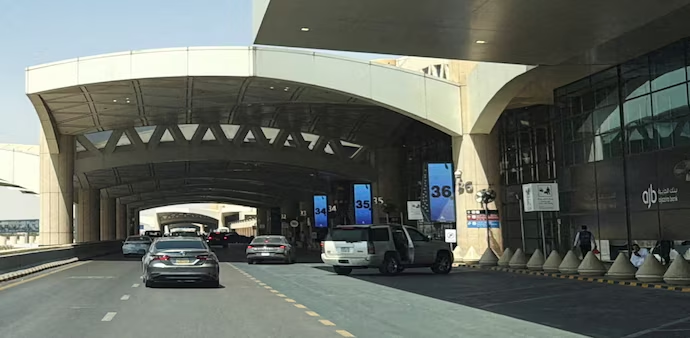
The conflict has already claimed the lives of several Indian citizens in the wider region. Some were killed in attacks involving commercial vessels, while others died in incidents on land. In the latest reported case, an Indian national was killed during an Iranian strike that targeted Kuwait International Airport.
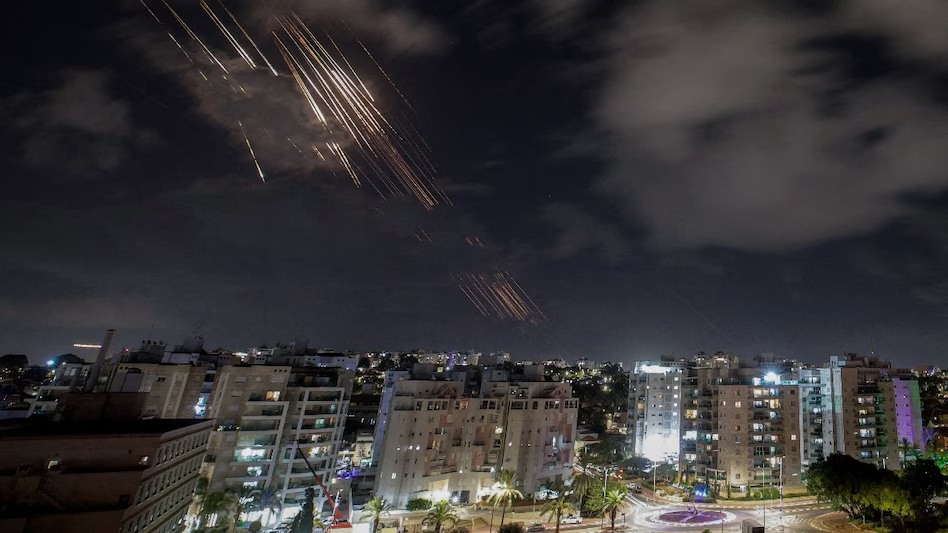
The latest escalation began on Sunday evening when Iran launched a missile towards Israel, describing the attack as retaliation for an Israeli strike on Hezbollah positions in Lebanon. Israel’s military said it successfully intercepted the missile
Hours later, Israel announced strikes on what it described as military targets inside Iran. Iranian state media reported explosions in several cities, including Tehran, Tabriz and Isfahan, indicating a widening scope of military activity.
The developments came despite comments from US President Donald Trump, who said he intended to speak with Israeli Prime Minister Benjamin Netanyahu to discourage a military response to Iran’s missile launch. However, Israeli strikes proceeded in the early hours of Monday.
The growing confrontation has also affected maritime security. Following the Israeli attacks, Yemen’s Houthi movement announced a blockade of the Red Sea. Similar actions by the group in 2023 and 2024 disrupted global shipping routes, forcing many vessels to take longer journeys around Africa and increasing transportation costs worldwide.