
Organised by the Spanish Association of Former Parliamentarians, in collaboration with the Embassy of India in Madrid and the Indian Culture Centre Foundation, the event was moderated by Senator Robert Masih Nahar
Madrid
On Friday, October 2, the Sert Room of Spain’s Congress of Deputies hosted a commemoration of the 157th anniversary of the birth of Mahatma Gandhi, coinciding with the International Day of Non-Violence. The gathering brought together diplomatic representatives, former parliamentarians and members of civil society to honour his memory and reflect on the continuing relevance of his ideas to the challenges facing the world today.
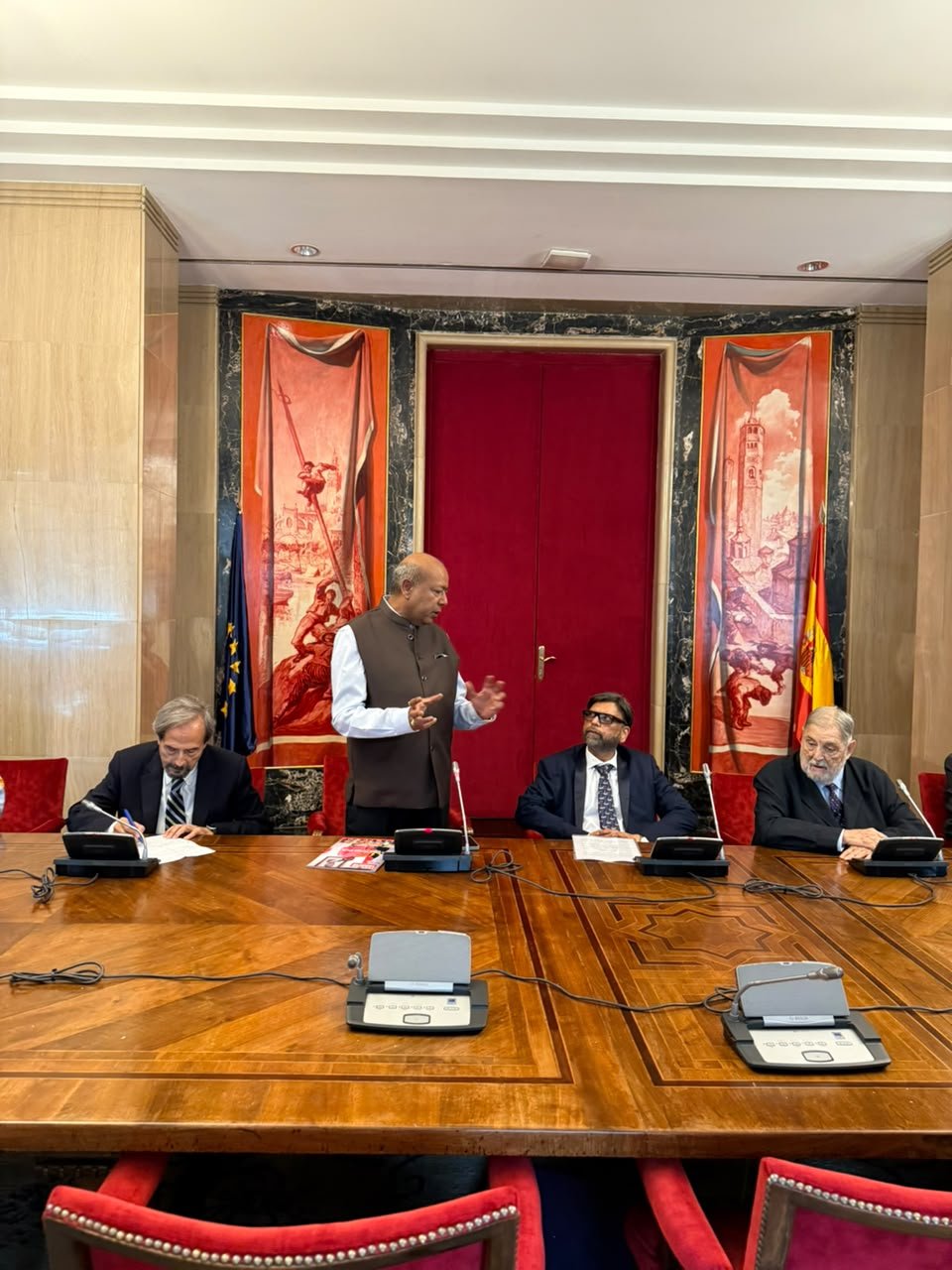
Organised by the Spanish Association of Former Parliamentarians, in collaboration with the Embassy of India in Madrid and the Indian Culture Centre Foundation, the event highlighted the importance of dialogue, peaceful coexistence and the peaceful resolution of conflicts. The Congress of Deputies provided a particularly meaningful setting in which to recall the ethical dimension of political action that Gandhi championed throughout his life.
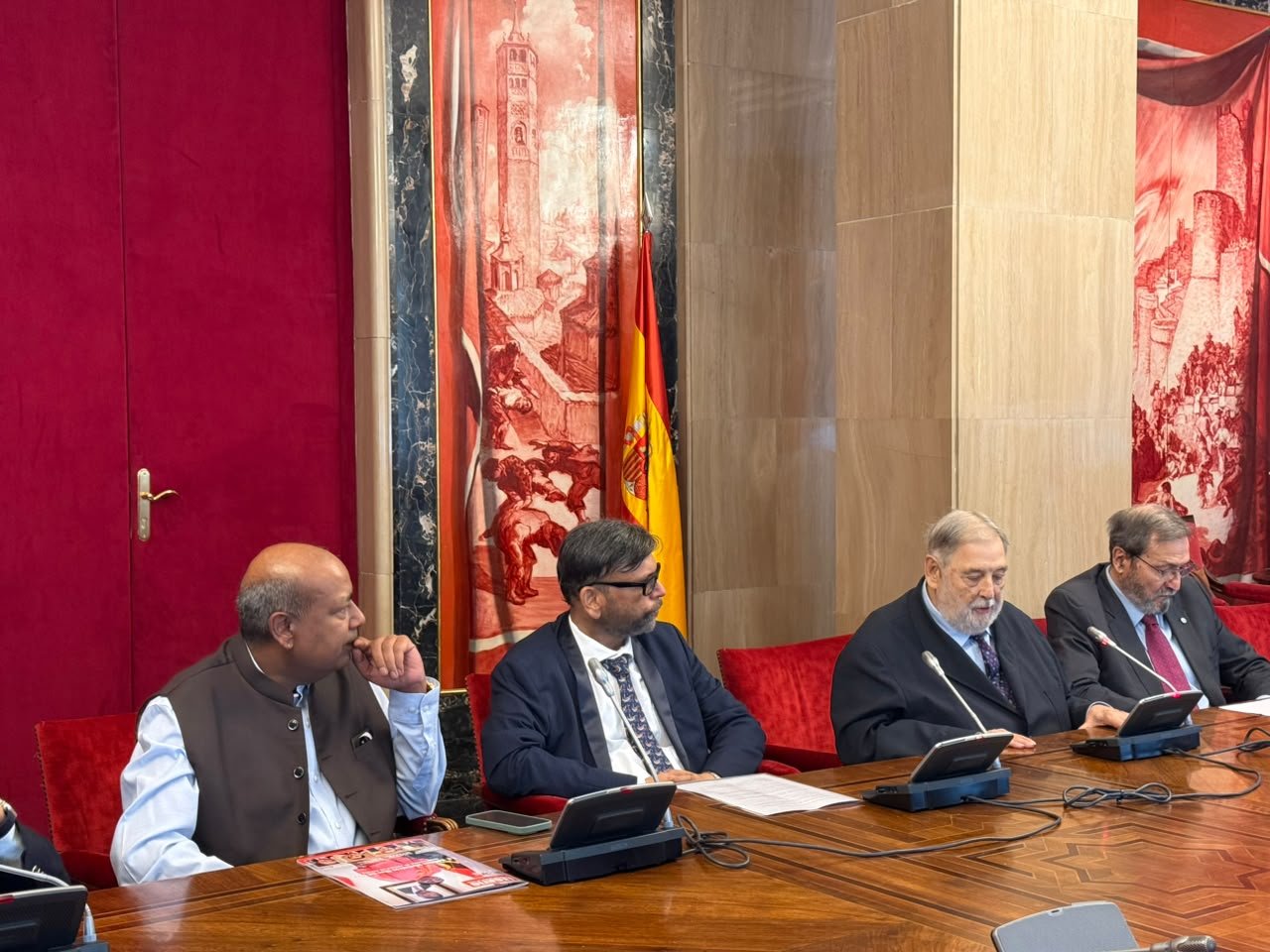
The event was moderated by Senator Robert Masih Nahar, who guided the proceedings and introduced the speakers, bringing together parliamentary, diplomatic and civil society perspectives on the Indian leader’s legacy.
Opening remarks were delivered by the Association’s President, Juan Van-Halen; its Vice-President, Pedro Bofill; and its Secretary-General, Fernando Sanz. They highlighted Gandhi’s universal significance as an example of ethical political leadership and his commitment to social justice, human dignity and the protection of the most disadvantaged. They also recalled the importance of non-violent civil disobedience in his life’s work and its influence on subsequent movements for social change.
Secretary-General Fernando Sanz devoted particular attention to the international situation. In the face of the many wars that continue to cause suffering around the world, he spoke of the need today for a figure like Gandhi, capable of inspiring a path towards peace through dialogue and non-violence. His remarks brought the tribute’s message firmly into the present, recalling how much Gandhi’s example is needed in times of conflict and division.
-
The Ambassador of India in Madrid, Jayant Khobragade, noted that although Mahatma Gandhi never visited Spain, he is deeply admired in the country
-
He highlighted the principle of ahimsa, or non-violence, as the foundation of Gandhi’s thought and action, and underlined the enduring relevance of a legacy that transcends borders and generations
The Ambassador recalled Gandhi’s role in India’s struggle for independence and his commitment to non-violent resistance. He also addressed the influence of Gandhi’s ideas on the struggle for civil rights and against discrimination, including their impact on figures such as Martin Luther King and Nelson Mandela. In this context, he recalled the United Nations’ recognition of Gandhi’s legacy through its designation of 2 October as the International Day of Non-Violence, an occasion to renew the commitment to peace and understanding among peoples.
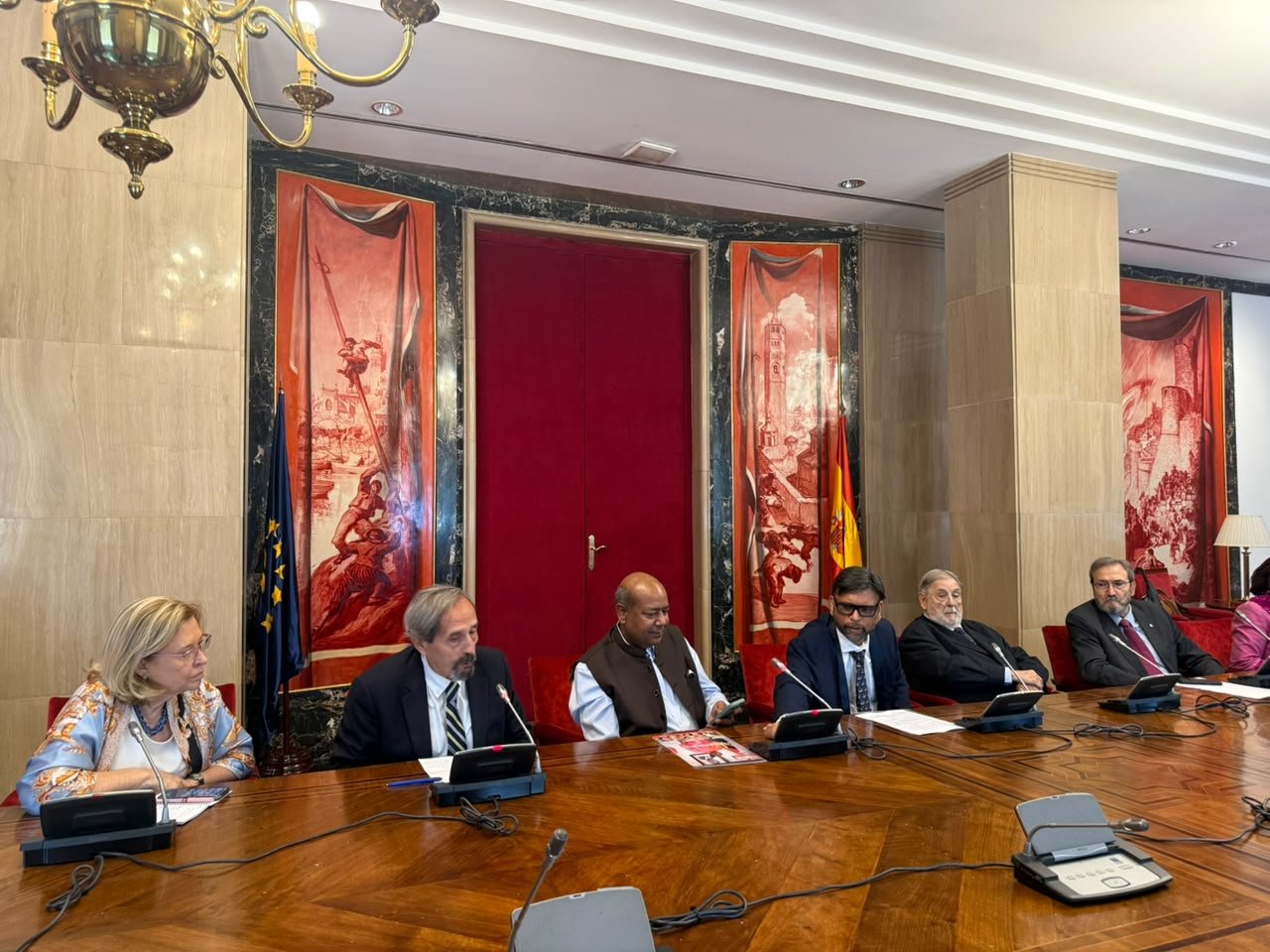
The commemoration was attended by the Ambassador of Angola, Balbina Malheiros Dias da Silva, as guest of honour. Also present were several members of the governing board of the Spanish Association of Former Parliamentarians, representatives of civil society, business leaders and Ms Eva Benedico Marzal, representing the Indian Culture Centre Foundation. The diversity of those attending reflected the breadth of Gandhi’s influence and his ability to bring together people from different backgrounds and perspectives.
The Indian Culture Centre Foundation’s collaboration in the event forms part of its work to strengthen cultural ties between India and Spain and promote mutual understanding. Its participation helped connect the institutional tribute with civil society’s efforts to advance intercultural dialogue and peaceful coexistence.
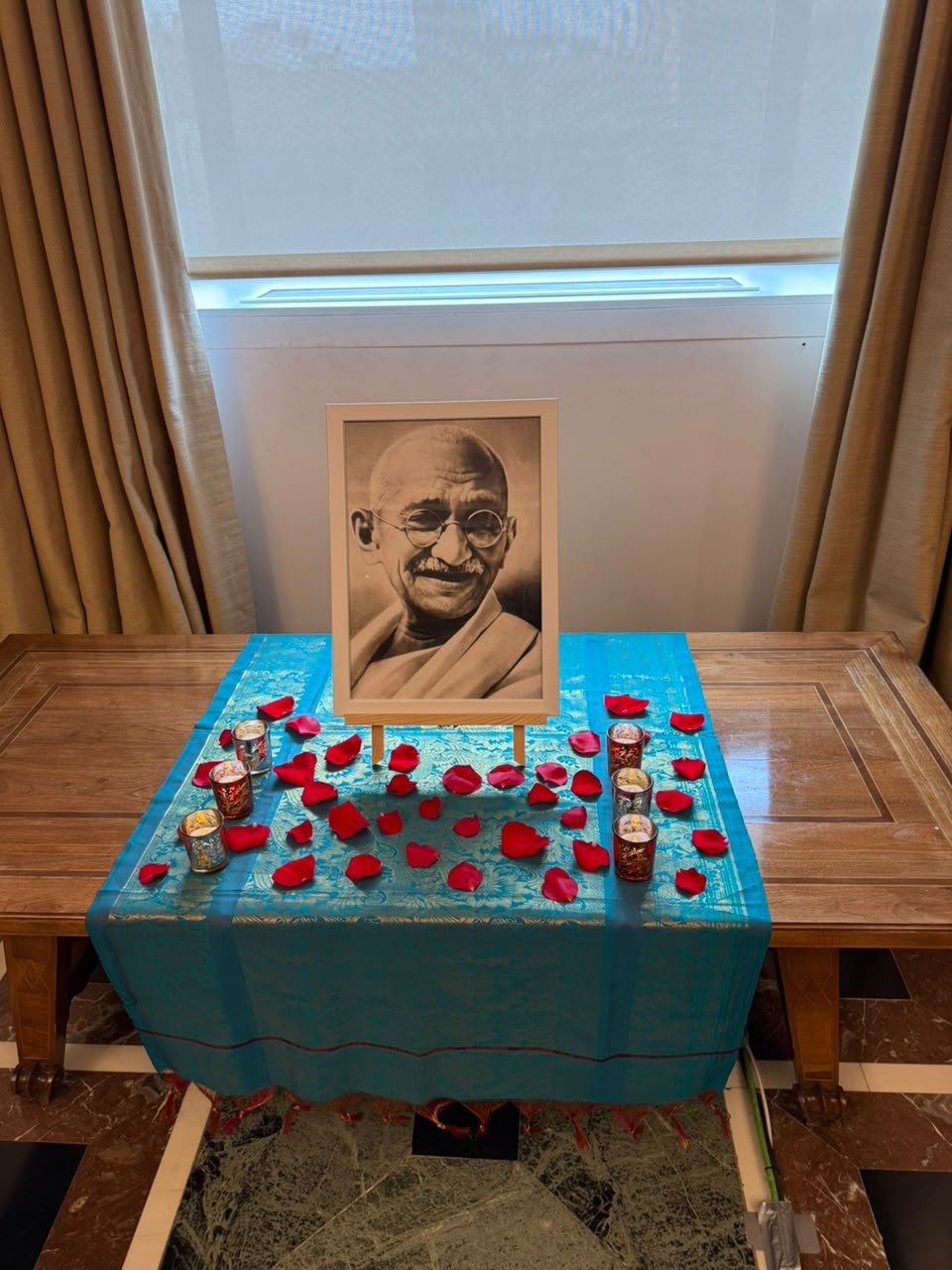
The event concluded with a moving floral tribute before a portrait of Mahatma Gandhi, in which those present took part. This shared gesture of respect brought to a close a commemoration dedicated both to his memory and to the enduring relevance of his message: the defence of human dignity and the pursuit of peace through non-violence.