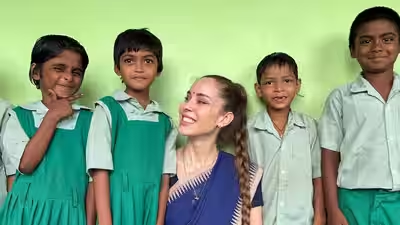
Sandra Lavie Gojkovic exchanged a successful international career for a mission to provide free education to underprivileged children in a remote Indian village
A Swiss woman who left behind a comfortable corporate career in Dubai has found a new purpose in life by establishing a free school for children in a remote Indian village, dedicating herself to improving access to education in an underserved community.
Sandra Lavie Gojkovic had what many would consider an ideal lifestyle. Raised in Switzerland, she built a successful career in Dubai, enjoyed financial security, travelled extensively and lived with all the comforts associated with a high-paying corporate job. Despite her professional achievements, she felt a growing sense that her work lacked deeper meaning.
Determined to make a difference, Gojkovic made a life-changing decision. Carrying only a few personal belongings and a one-way ticket, she travelled to India and settled in a rural village, where she began working closely with local residents to understand their needs.
Recognising that many children had limited or no access to quality education, she set out to establish a school offering free education to disadvantaged families. The initiative was built gradually through community support, with Gojkovic spending months meeting villagers, seeking assistance and encouraging local participation in the project.
-
Sandra’s new life stands in sharp contrast to her former corporate routine
-
Instead of boardroom meetings and international travel, she now focuses on managing the school and supporting the education and welfare of children in the village
-
She believes that lasting social change begins at the grassroots level and that investing in education can transform communities over the long term
Gojkovic has described the school as her life’s mission, saying the fulfilment she has found through community service outweighs the comforts she left behind. Her journey highlights how individual commitment and local engagement can help expand educational opportunities in some of India’s most remote areas.