
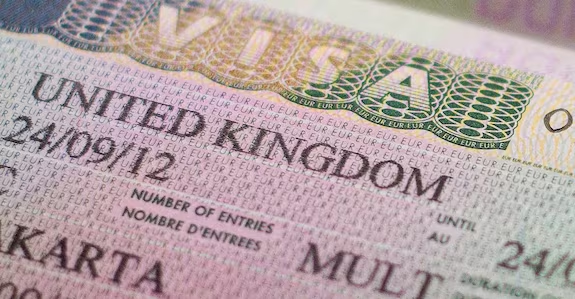
Stricter immigration requirements and concerns over visa compliance are creating uncertainty for applicants, forcing some universities to reconsider admissions offered to international students
UK universities are withdrawing admission offers made to some Indian and Pakistani students amid tighter visa rules and increased scrutiny of international student applications, raising concerns among prospective students planning to pursue higher education in Britain.
The developments highlight the growing challenges faced by international applicants as universities respond to stricter immigration requirements and closer monitoring of student visa compliance. Indian students, who form one of the largest international student groups in the UK, could be affected by changes in institutional admissions practices.
-
Universities sponsoring international students must meet the requirements of the UK government’s student visa system
-
Institutions are expected to maintain appropriate records, monitor student attendance and engagement, and comply with rules governing the recruitment and sponsorship of overseas applicants
A university’s ability to sponsor international students can be affected if it fails to meet the required standards. This has encouraged institutions to exercise greater caution when assessing applications and issuing or retaining admission offers.
For affected applicants, the withdrawal of an offer can disrupt academic plans, accommodation arrangements and financial commitments. Students who have already paid deposits or made travel preparations may also face uncertainty over refunds and alternative study options.
Indian and Pakistani applicants should carefully check the terms of their offers and seek written clarification from their universities if an admission decision changes. They should also confirm whether any withdrawal is linked to documentation, institutional policy or visa-related concerns before deciding on their next steps.
Applicants planning to study in Britain should ensure that their academic records, financial evidence and other supporting documents are complete and consistent. They should also rely on official university communications and UK government guidance rather than unverified information circulating online.
The situation underlines the importance of understanding visa requirements before committing to an overseas course. Students may need to consider alternative institutions or defer their studies if their original plans are disrupted.
For universities, the challenge is to comply with immigration rules while providing clear communication and fair treatment to international applicants. The precise circumstances behind individual withdrawals may vary, and students should obtain case-specific explanations rather than assume that all affected offers have been withdrawn for the same reason.
The key development is a new compliance threshold introduced by the UK Home Office. From June 2026, universities applying for a student-sponsor compliance assessment must maintain a visa refusal rate below 5%, an enrolment rate of at least 95% and a course completion rate of at least 85%. Failure to meet core requirements can lead to a poor compliance rating and potentially the loss of permission to recruit international students.
A report published on 14 October 2026 said universities were withdrawing offers partly to avoid breaching the new visa refusal threshold. Indian applicants are not subject to a blanket ban, but individual applications and university decisions may face closer scrutiny.