
The 2.69-km Nagdhunga-Sisne Khola Tunnel marks a new era for Nepal’s transport network, cutting through the hills to bypass a notorious highway stretch and offering a faster, safer route into Kathmandu.
KATHMANDU – For years, the road into Nepal’s capital Kathmandu has tested the patience of drivers, with steep climbs, sharp bends and lines of waiting trucks. Now, the Himalayan nation is taking traffic underground.
On Monday Nepal officially opened the Nagdhunga-Sisne Khola Tunnel, the country’s first modern road tunnel. The project aims to ease one of Kathmandu’s busiest bottlenecks and improve the movement of people and goods into the capital.
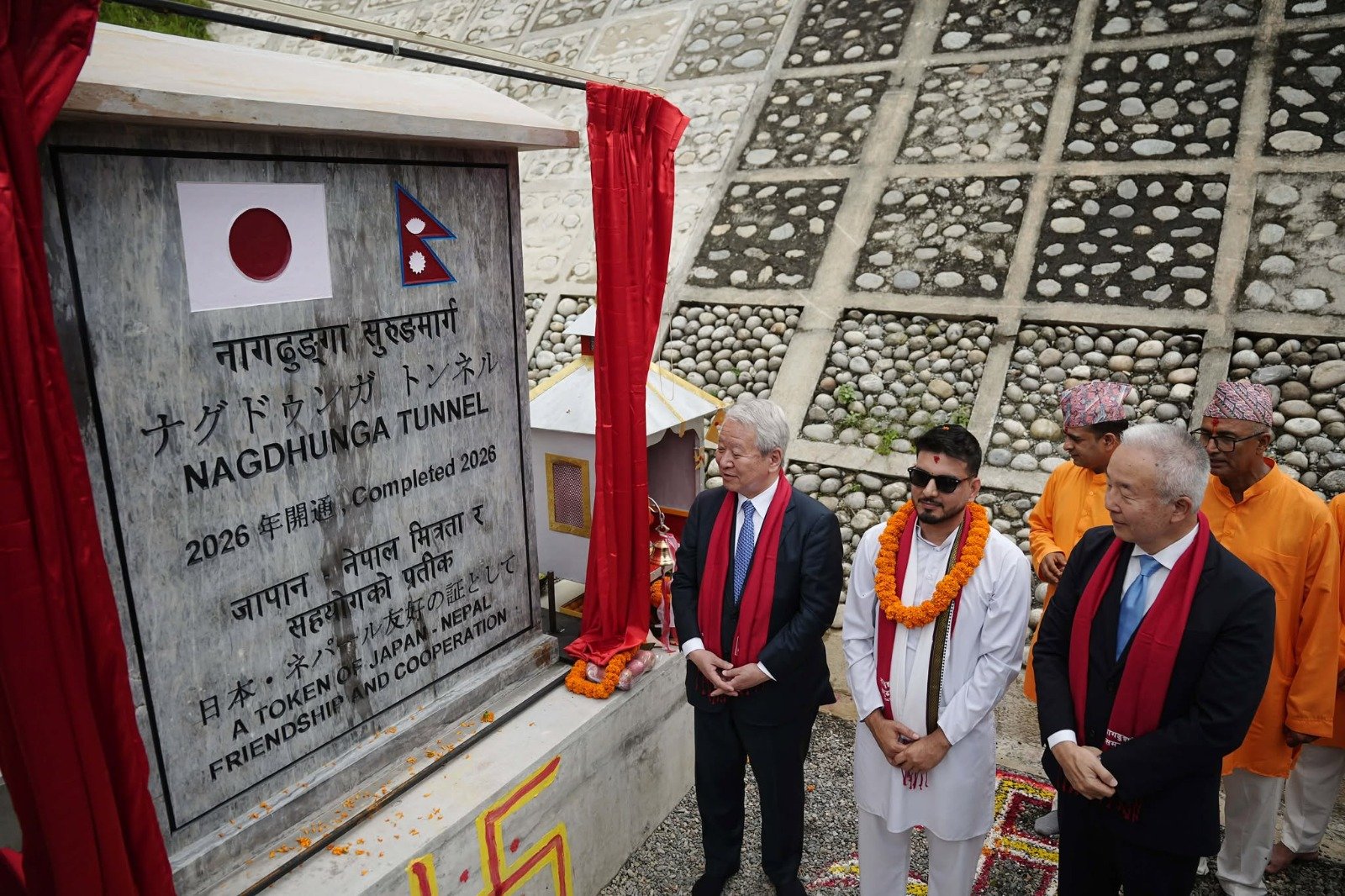
Minister for Physical Infrastructure and Transport Sunil Lamsal inaugurated the tunnel in the presence of Japanese Ambassador to Nepal Maeda Toru and Japan International Cooperation Agency (JICA) President Tanaka Akihiko.
The 2.69-km tunnel creates a new route through the hills west of Kathmandu, linking Dahachok in the capital with Sisne Khola in Dhading. It bypasses the steep and congested Nagdhunga section used by more than 8,000 vehicles daily, including cargo trucks transporting goods from India. The corridor is expected to cut travel time by about an hour.
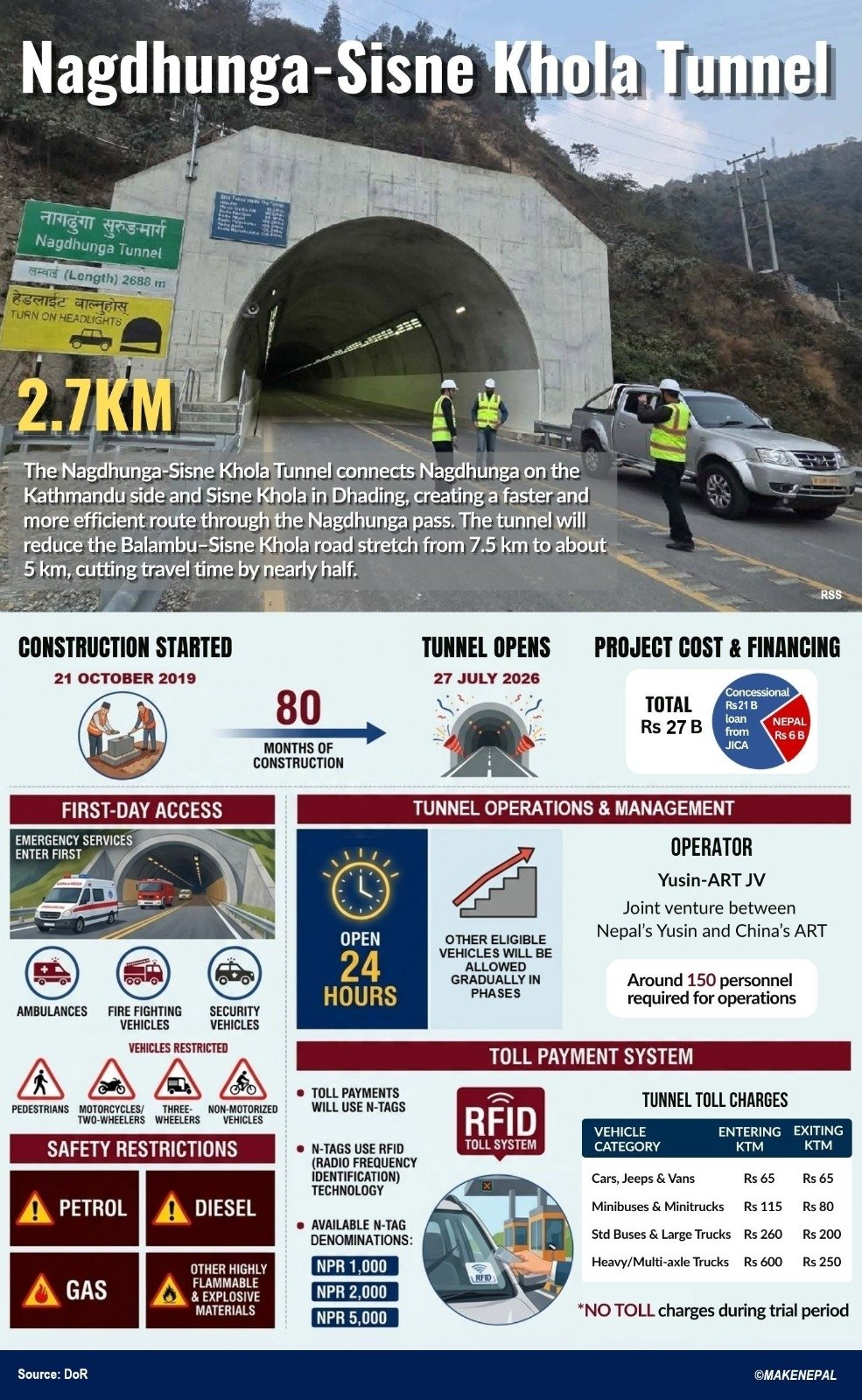
However, access to the tunnel will be limited initially. During a trial period of about three months, only ambulances, fire engines, security vehicles and other essential services will be allowed to use the tunnel, said Deputy Project Director Sanjaya Panthi. “Other vehicles will be allowed gradually after safety and traffic assessments.”
The project said vehicles would be allowed to use the tunnel free of charge during the trial period. Once full operations begin, cars and vans will pay NRs 65 to enter Kathmandu and NRs 60 to exit. Minibuses, trucks and tippers will pay NRs 115 inbound and NRs 80 outbound. Buses and large trucks will pay NRs 260 entering Kathmandu and NRs 200 leaving.
The government has appointed the Sino-Nepali joint venture Yusin-ART as the tunnel operator. The tolls will be collected through RFID-based N-tag stickers, which are available in prepaid denominations of NRs 1,000, NRs 2,000 and NRs 5,000.
Pedestrians, motorcycles, scooters, three-wheelers and vehicles carrying flammable or explosive materials, including petrol, diesel and gas, will not be allowed to enter the tunnel.
The project includes a 2,688-metre main tunnel and a 2.55-km emergency rescue tunnel. It also features approach roads, bridges, a flyover and safety systems including CCTV, communication networks and fire-control equipment.
The contract was awarded to the Japanese company Hazama Ando Corporation. Construction began in October 2019 and was scheduled to be completed within 42 months. However, the project was delayed by the COVID-19 pandemic, difficult ground conditions, landslides, and design changes.
Costs also increased, rising from an initial estimate of about NRs 22 billion to round Rs 27 billion. Officials attributed the increase to design changes, weak geological conditions, higher material prices, exchange-rate losses, and delays.
The project was financed mainly through a concessional Japanese loan of about Rs 21 billion, with Nepal covering the remaining cost. The bulk of the Nepali share of the NRs 6 billion was spent on land acquisition and compensation, according to the officials. About 60 acres of land were acquired for the project on both ends of the tunnel.
The tunnel highlights Nepal’s challenge of building modern infrastructure across difficult terrain. It also reflects the country’s push to create transport links that can support a growing economy.
Plans were afoot to build tunnels in other landslide-prone areas, Minister Lamsal said. “Funds have been allocated in the current year’s budget for studies and construction at multiple sites.”